Introduction
Each morning I do a quick skim of recorded events from my security system. Living in the mountains I get to enjoy clips of a wide variety of wildlife that visit for the last three years. That’s typically bears, deer, foxes, turkeys, rabbits, and a skunk. On rare occasions that includes mountain lions, coyotes, and raccoons. Oh, and squirrels. Lots and lots of squirrels…
The security system is pretty simple with Google Nest cameras that tie into Google Home. While I can monitor via the web site and use it like a traditional security system, the Android app makes it easier to skim and filter events. It has configuration options that allow you to set notifications if the system detects e.g. people, animals, or vehicles. There are quite a few more configuration options and tie-ins with other Google equipment available, but I keep it simple with those notifications.


App Information


Starting on August 13, I noticed the system began to misidentify turkeys as “Person”. After three years that seemed like an odd change to me for all of a few seconds, before I immediately blamed “AI”. I had no evidence during that little string of thoughts of course. But it prompted me to start digging a bit. The system gives access to the last 30 days of captured video segments. It’s important to note that you can’t go back three weeks and just watch footage. Like many new systems, it will capture clips that range from seconds to several minutes based on the activity detected and the person/vehicle/animal being in frame.
Achieving Personhood
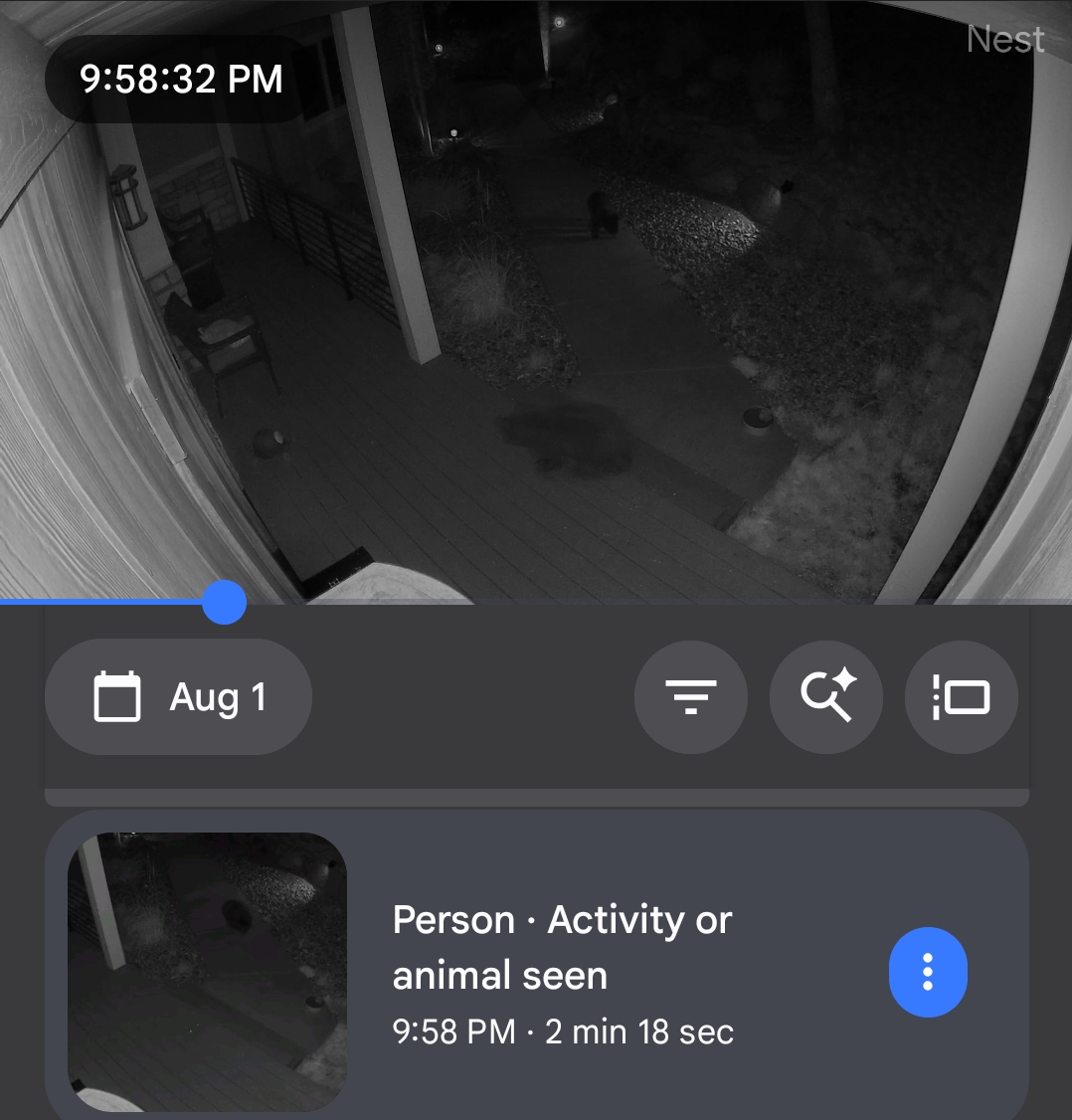
Skimming back I found the system frequently misidentified turkeys and occasionally misidentified a Stellar’s Jays, and even a bear once. The first occurrence of this misidentification I could find was on July 26, 2026. Most of the time, turkeys were identified as “Animal” but they were definitely the worst offender as far as being categorized as human at times.

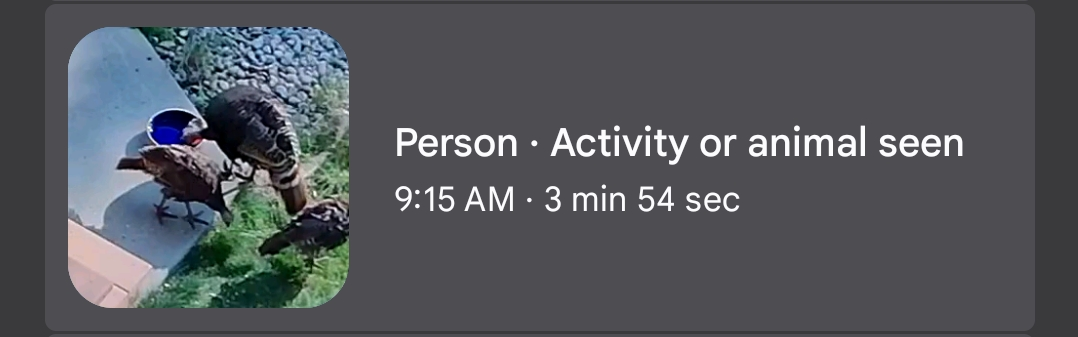

Obviously, the shape of a turkey in any situation isn’t particularly close to a person. Wild turkeys can get fairly big but still shouldn’t be identified otherwise. At other times the system will identify as “Person” but also “Activity or animal seen”, so it’s partially right but the person thing is still wrong obviously. More baffling is the much smaller Stellar’s Jay which looks similar to a Blue Jay with a crest.

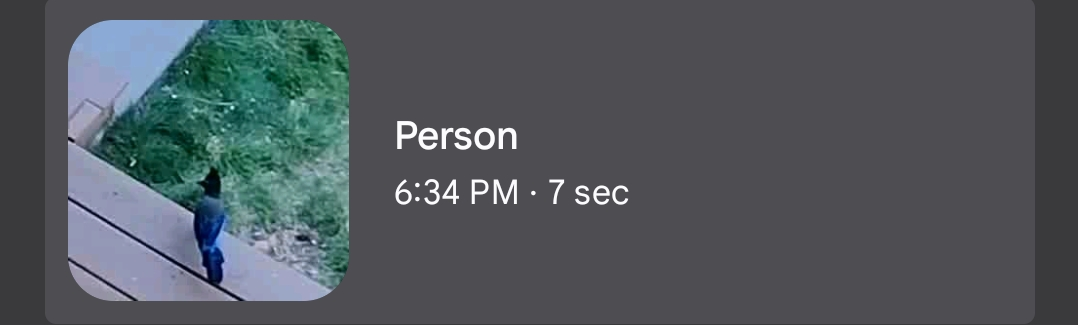
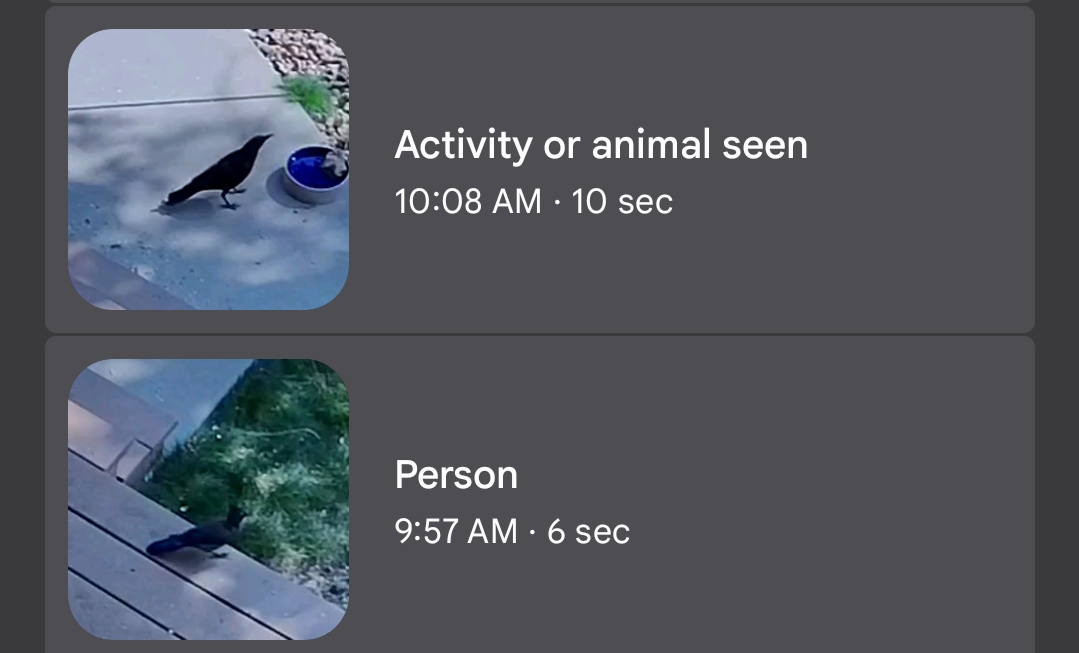
Curious that in the picture above, it identifies the Stellar’s Jay as a person, but not the crow. Despite them being relatively close in size, standing in a similar manner, with the same general profile.
Other Oddities
Perhaps the most odd identification was what appeared to be a spider crawling up a web late in the night. The Google Nest cameras have built-in infrared (IR) LEDs that do a good job for the most part. In the past three years there have been maybe half a dozen instances where a spider crawled on or in front of the camera, but was never misidentified as a person or even animal. However, in the last few weeks it happened.
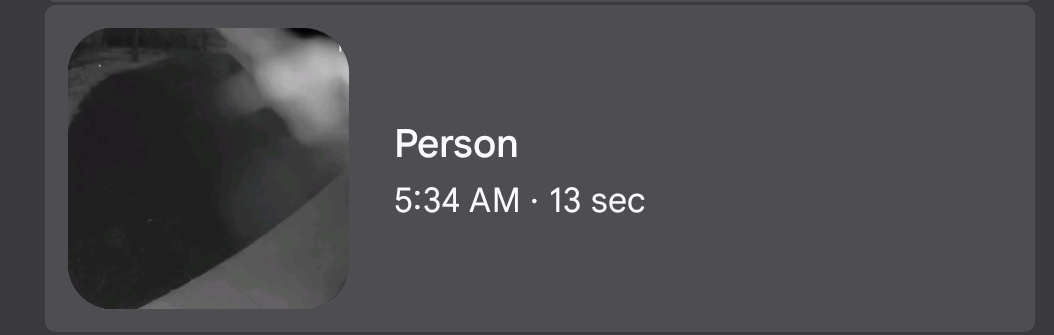
Historically, the system has always had a problem with misidentifying vehicles at night. This is compounded when it is raining or snowing with wind as it causes the night vision to “see” hundreds of small “lights” move by. That, I believe, is what happens as it sees all of that as headlights when it isn’t.

The last fun misidentification only happened once, but a bear cub got labeled ‘Person’. Another case of confusion as the shape of any bear, large or small, is decidedly different from a human. So not just turkeys that gained personhood it seems!
Causality
Over three years of no (or very rare) misidentification and now a steady streak. Why? I was definitely curious and started digging. First thing is to check if a new version of the Google Home app had been installed recently. Fortunately, Google publishes release notes for the app and provides a fair amount of detail. There was a July 23 version released which is just three days before the first misidentification I could find. That is well-timed and a solid lead. Checking out the details one bit stood out:

Given this is a Google-based technology stack, I figured it was very likely that their large language model (LLM) “AI” offering Gemini was embedded. Reading through more of the releases there are plenty of mentions of the technology. The first goes back to October 1, 2025 where Gemini is the only update for the release.

It’s impossible to be 100% certain that the introduction of Gemini, and more importantly, changes to that technology just days before the misidentification started is the cause but I am sold. So why does this matter? If my security system has issues properly identifying people, animals, and vehicles, it can lead to a compromise of the integrity of the system. Imagine if your system is configured only to give notifications of people only. You are worried about burglary or some other nefarious activity. What if the system sees a person but identifies them as an animal? That human could be close enough to a bear standing up to be misidentified, right?
If the system can identify a twelve inch bird that weighs up to five ounces as a person, it’s quite believable that the system might misidentify a person. That leads me to wonder if there have been security incidents due to the integration of so-called “AI” into home security systems. If or when that happens I am sure there will be interesting legal opinions and aspects that accompany the incident.

Leave a Reply