I recently attended NaClCON in Carolina Beach, North Carolina. After the con concluded I took a drive through North Carolina, Virginia, Washington D.C., West Virginia, Kentucky, Tennessee, and back through North Carolina to fly out. Between June 3rd and June 12th I drove around two thousand miles to see a couple states I had never been to as well as areas of other states I had not. Having knowledge of many white squirrel colonies around the country, many of them in areas I would be driving through, I added three stops to my trip. Redundancy in case I didn’t find one! If you want the TL;DR, skip down to the second heading!
The Journey

My first stop was in Short Pump, Virginia. Yes I laughed at the name because I still have a juvenile streak in me. I should have done my research though, beyond the information on the White Squirrel Institute’s pages. Even using Google Gemini’s results gave a lot of areas that sounded low probability of seeing them. The best option sounded like a specific park that had frequent reported sightings. However, I arrived to find out that several Boy Scout troops had been there for three days straight, morning to night. That meant the odds of squirrels being out near hundreds of screaming kids were low and the park was too big. To keep with my schedule I moved on knowing I had two fallback options.
Next up was three days later in Bowling Green, Kentucky. The Western Kentucky University (WKU) campus was considered the biggest hotspot of white squirrels in the area so I went there. I began by going into the campus store to see if they had any white squirrel merchandise and was sadly disappointed. A kind employee took some time to give me pointers on where to find the squirrels and informed me that the college president wasn’t a fan of squirrels and had ordered the store to remove white squirrel merchandise. What a raging jackass. Also, not sure what a ‘Hilltopper’ really is other than the WKU mascot but here we are.

With good intel about the locations, since the person I spoke with walked to work and passed the white squirrels every day, I headed out. Walking through a part of campus didn’t yield any results so I drove blocks away to a few cross-sections that they had said were frequent hot spots. No luck. I drove a few more laps weaving in and out of the campus and surrounding neighborhoods but still no luck. When I had pulled up to the campus it was just at the end of a pretty solid rain. On campus I had seen a single Eastern Gray Squirrel with the usual gray coloring but nothing after. So I had to move on.
Thanks for fallback plans, right? The night before I did more research since this would be my final time. I was staying in Asheville, North Carolina, and would be heading East toward Wilmington the next day. While Brevard seemed like the best option it was also backtracking an extra 40 minutes each way. My Googling found that the Rhododendron Lake Nature Park was as promising and only five minutes off my route. The next morning I woke up early to head out in search but Google Maps kindly warned me that the park was closed. Damn. Off to Brevard I went!
White Squirrel Success
Specifically, Brevard College was considered to be a hot spot and my research said that roughly one in three squirrels on campus were white as well as the immediate surrounding area. Pulling into campus my head was already on a swivel and there in the distance I saw what to me was unmistakably a white squirrel! I quickly parked and passed several gray squirrels which were surprisingly skittish. Noting that I proceeded to walk toward the white squirrels.
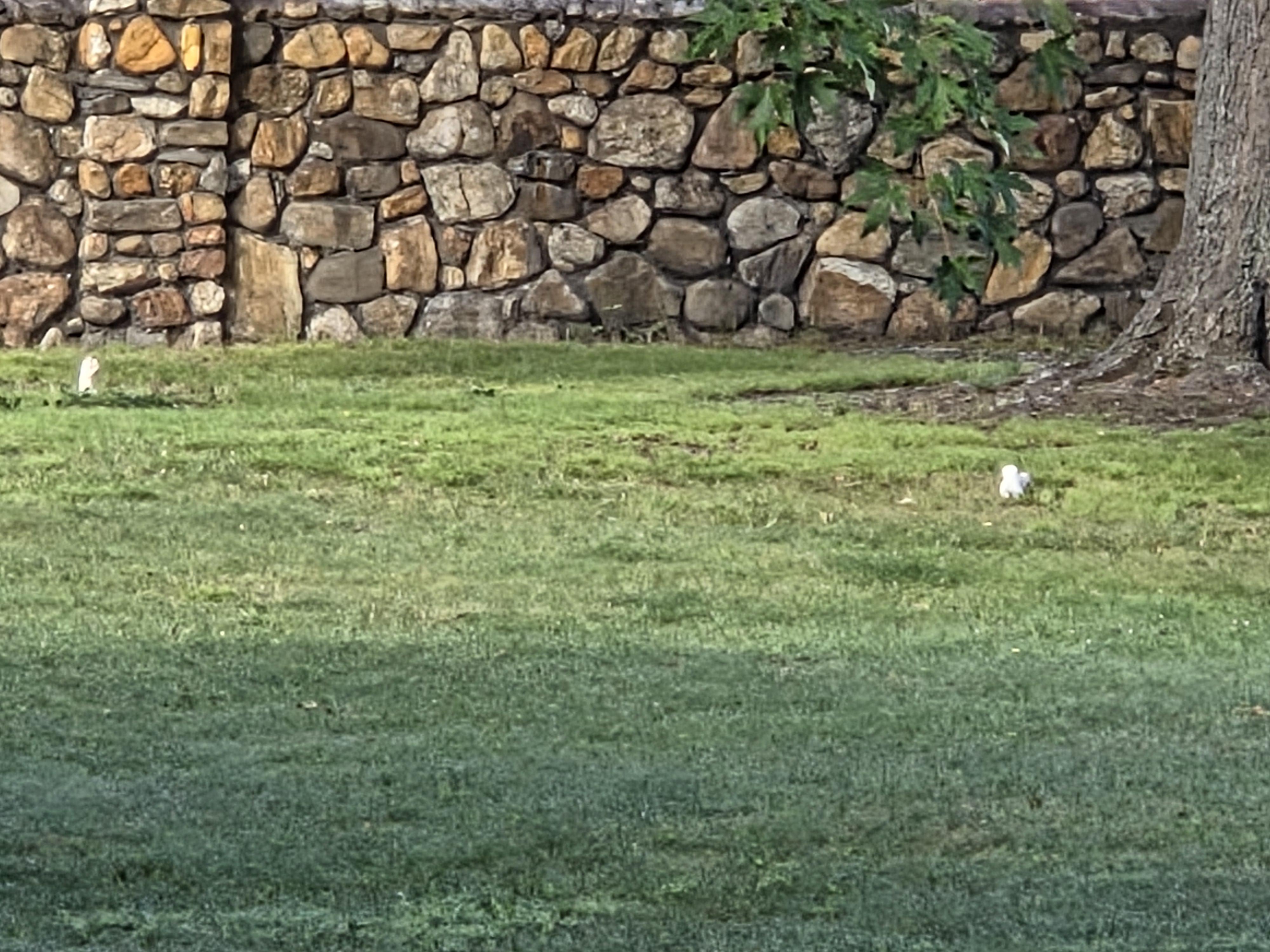
Tsk-tsking as I slowly walked to them did not yield the results I expected. Most frequently I find a squirrel will look to see what is happening with interest because it so often leads to someone feeding them. These squirrels ran to and then up the tree while I was still 30 or more yards away. Backing up and waiting a bit did not see their return to the ground either. Damn. Typically on college campuses squirrels live large with readily available trash and junk food thrown out. They are also often fed by students leading to imprinting which is ultimately not healthy for the animals. There was a good sign that these squirrels lived well, just not directly from humans and instead it was indirectly.

The best I could do with the college squirrels were get a few pictures from a distance. I had found the white squirrels but it felt like I still came up a bit short.

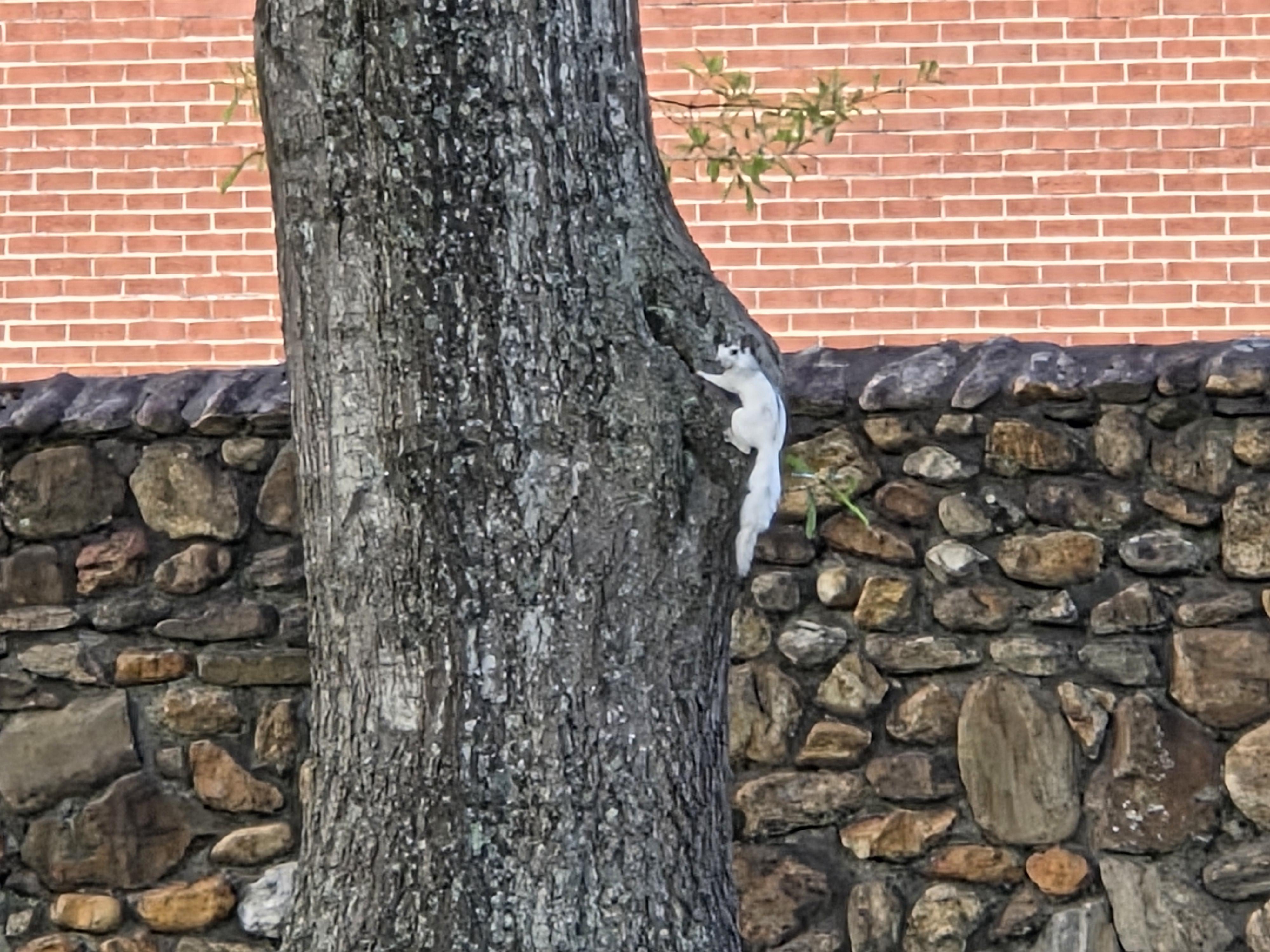


Since my research said that this recessive gene trait had spread to the surrounding area I drove into the surrounding neighborhoods. It didn’t take long to see another one but this time not so skittish as it lived close to the road. Pulling over I was finally able to get better pictures!


In this picture you can see that while the squirrels are white, they have black eyes. That means they are not albino and instead it is the recessive gene that leads to the color variation. In this case pure white but some squirrels will have splotches of other colors. One on campus had a reddish patch on his back for example. This white colorization is a form of leucism that has managed to become more common in specific areas. I was fortunate enough to see two Eastern Gray Squirrels together, one the typical gray color and one white, before heading out. This shows the contrast nicely.

With this I drove out back on schedule having a small squirrel bucket list item crossed off! =)
Leave a Reply