Introduction & History
I don’t actually recall the first time I drove or walked down Colfax Avenue in Denver, Colorado. It was in the early 1990s though. The fact the road has a considerable Wikipedia page tells us that it isn’t just another road. Around 50 miles long, it is considered the “longest continuous commercial street in the United States“, largely because it was the East/West highway before I-70 was created. In the 90s the road was a legend of sorts and almost everyone that has lived in Denver has spent some tiny portion of their life on it.

When I arrived in Denver, the road enjoyed a reputation as being seedy in spots, known for prostitutes and drugs, yet somehow just part of life in the city given its central thoroughfare. Someone I worked with at the time was a former police officer in Aurora and he told us several wild stories about patrolling including driving down Colfax with his partner and suddenly finding themselves in the cross-fire between rival biker gangs.

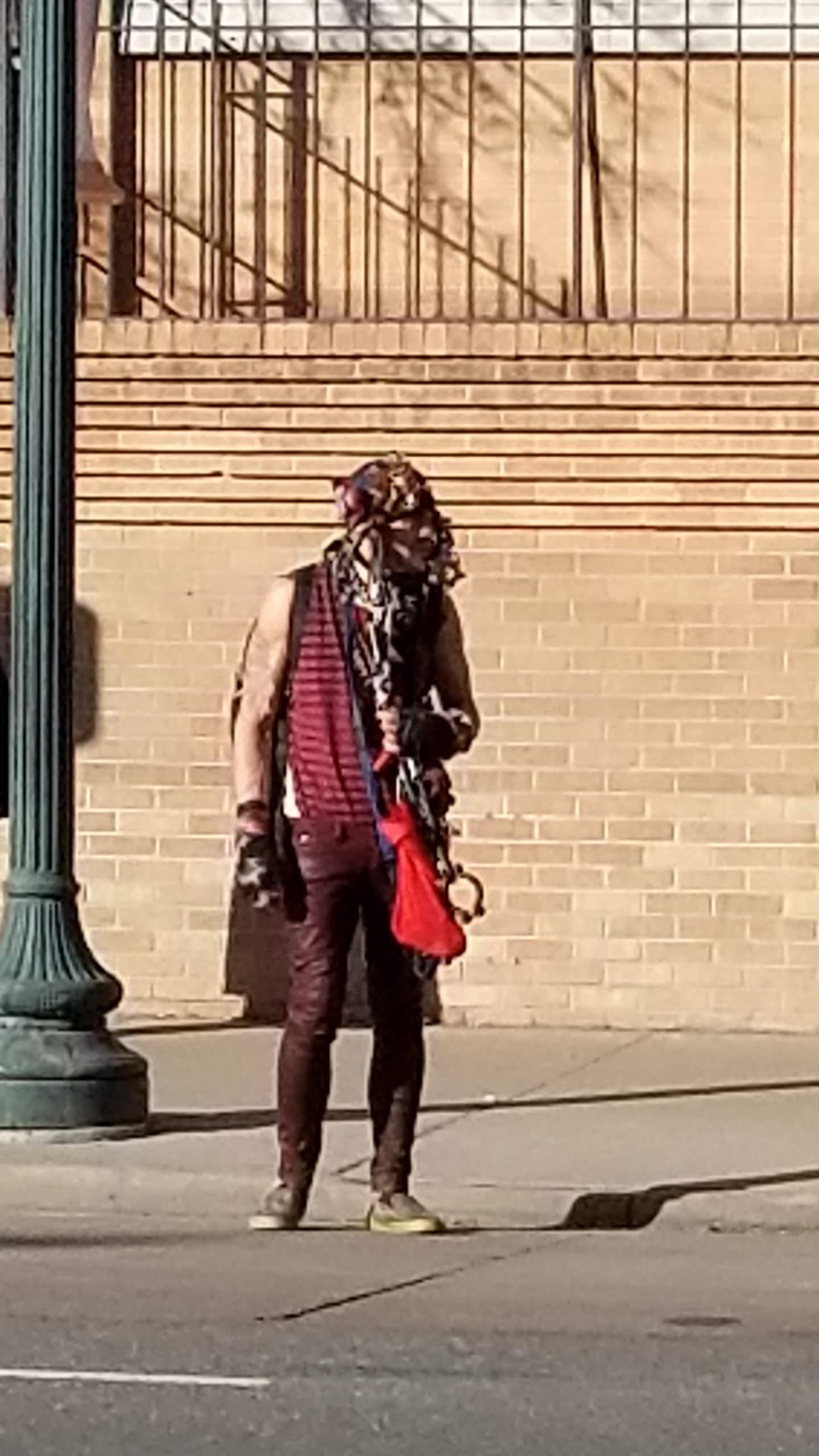
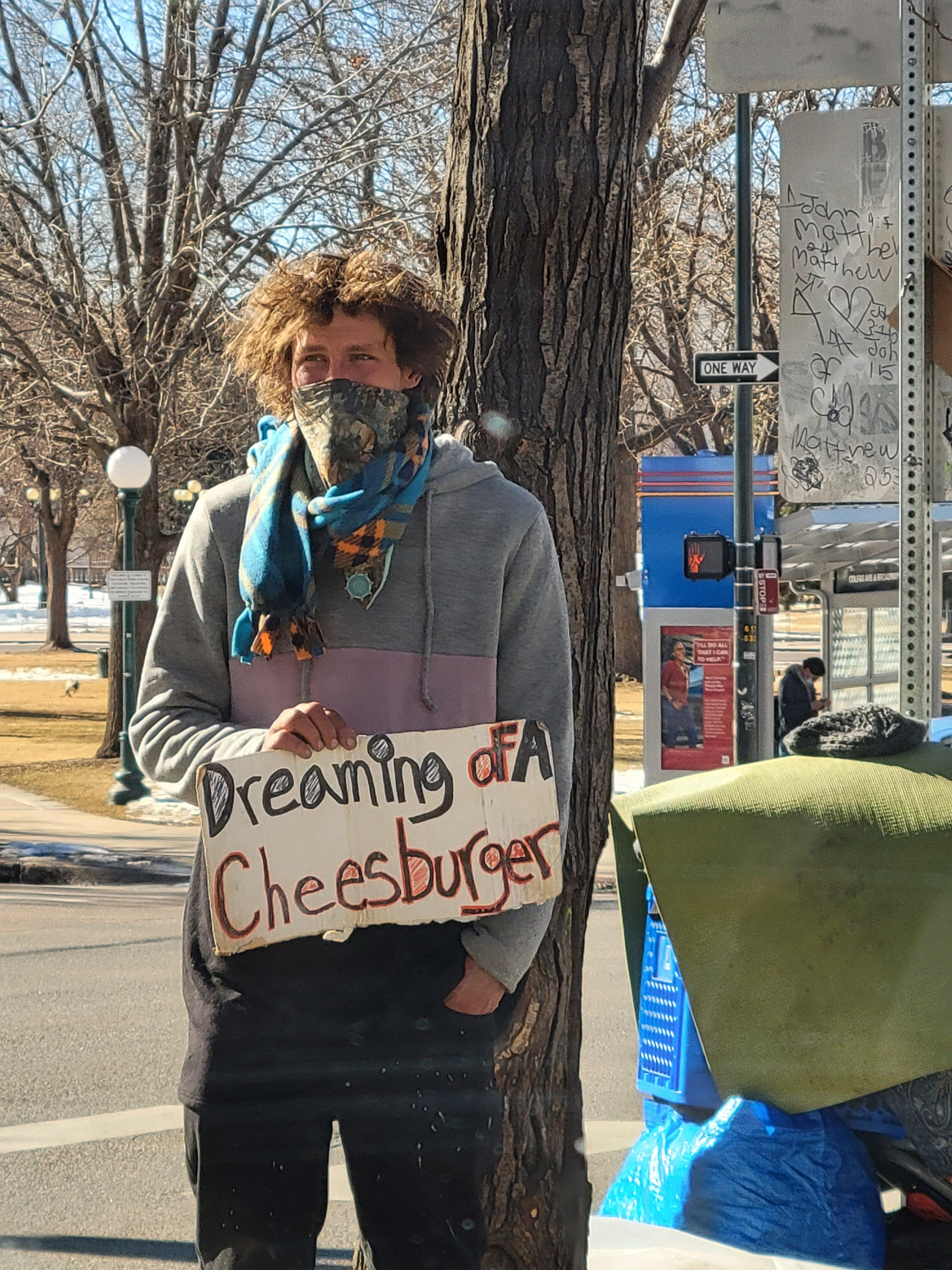
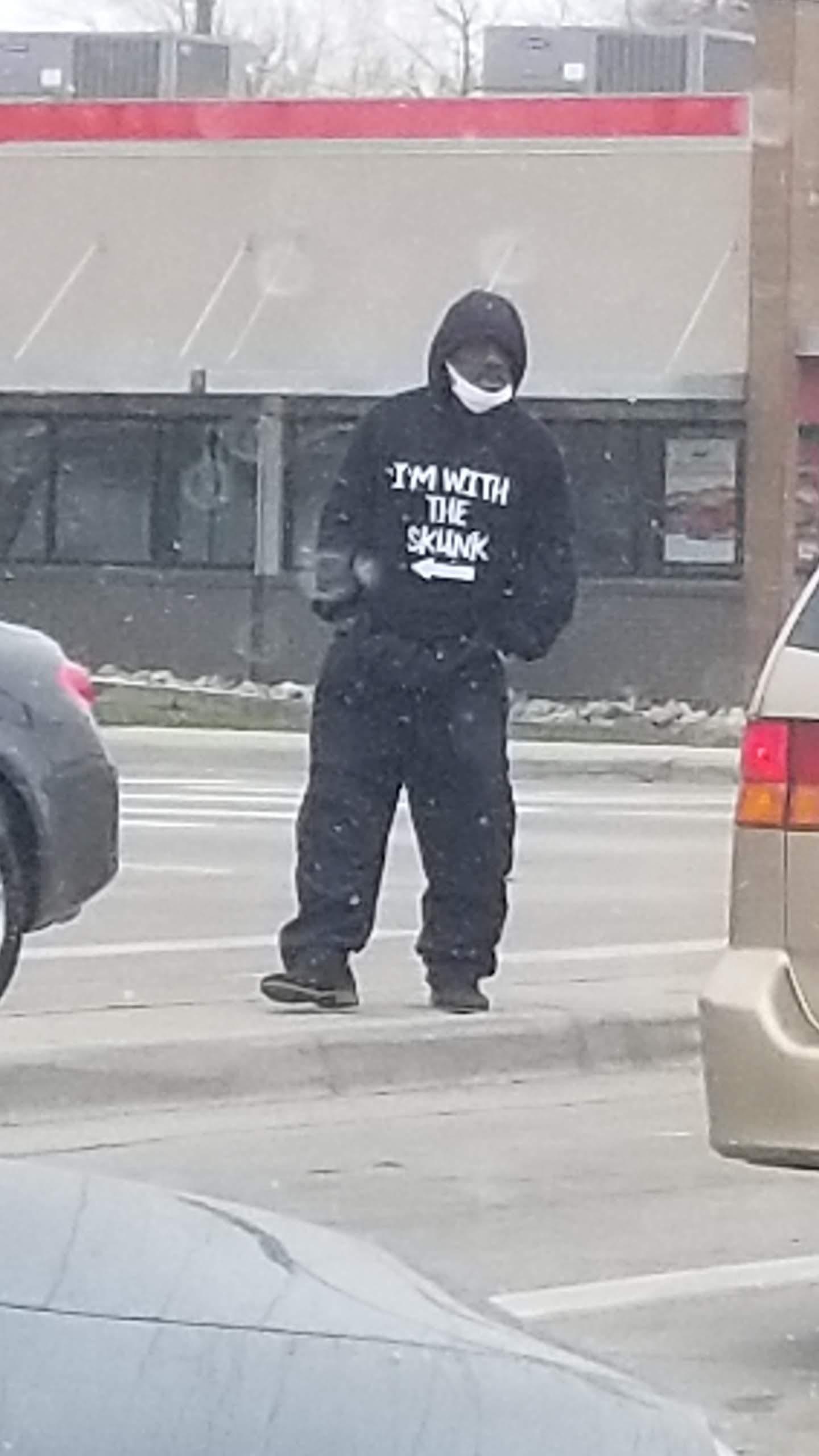
When I moved back to Denver in 2003 I lived just a few blocks off Colfax, so I spent a considerable amount of time driving or walking the road. Be it passing through, seeking food, or just to enjoy the people watching, it’s a prime location for that, especially between I-25 and Colorado Blvd. Every time I pass down the artery it has the feel that while the buildings may be the same, the experience is considerably different due to the denizens. Some time in the last two decades an unofficial campaign of “Keep Colfax Weird” started, mimicking Austin’s motto.

The Essence
There’s no way to capture a road like Colfax in a blog really. Words can only go so far and still fall short by miles. Watching the road change and evolve over more than two decades was fascinating from a sociological aspect and societal angle. In a span of only two miles there are three incredible music venues (Fillmore, Ogden, and Bluebird) which consistently brings thousands of people to the road every week. The bars, restaurants, and clubs along with a wide variety of other businesses make the road a staple for many Denverites in their daily life.


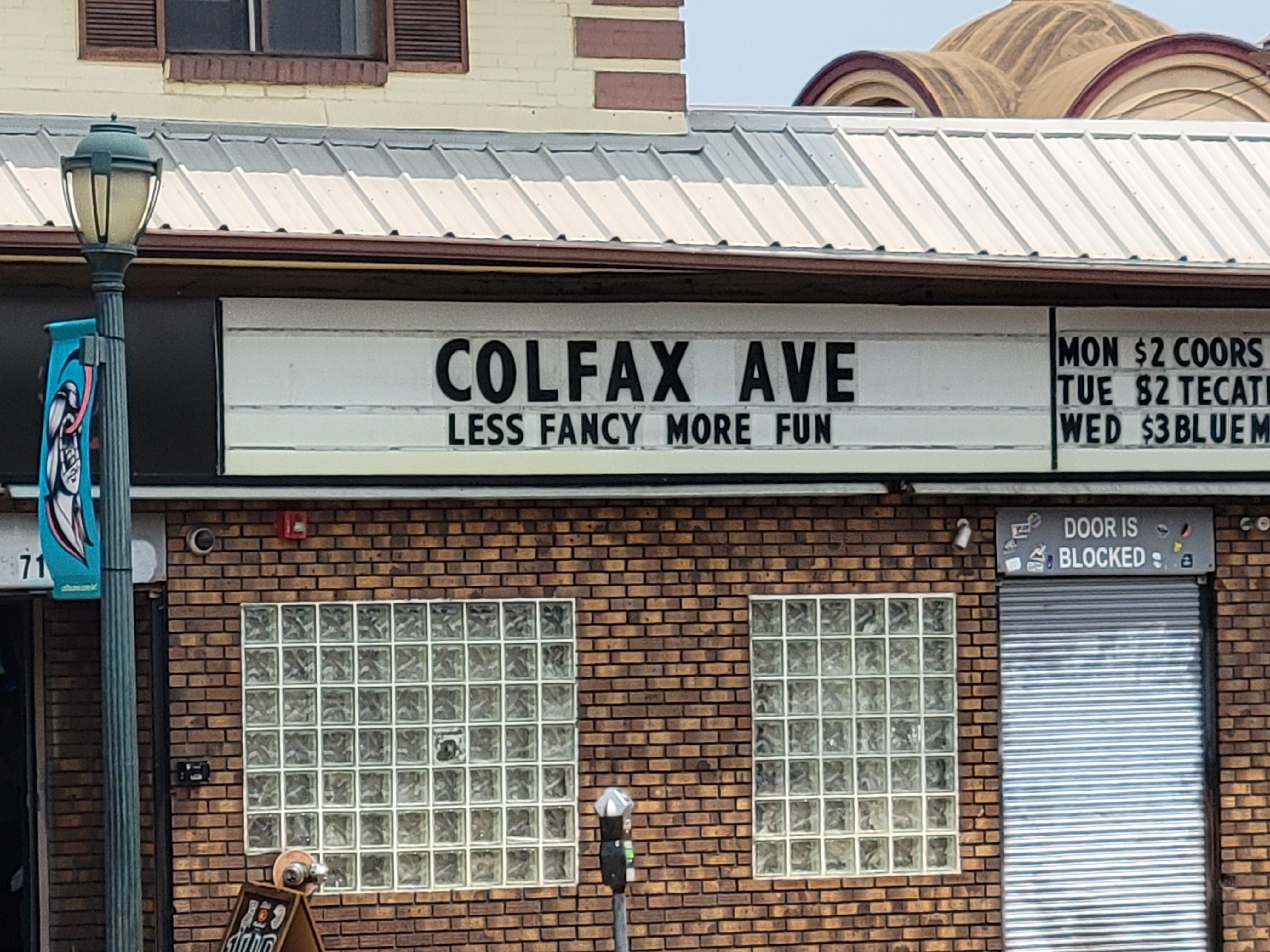
While businesses would come and go over that time, it wasn’t until maybe 2005 to 2010 range that Colfax started feeling different in some places. Old but interesting and unique buildings were dropped to make space for the new. Many of them didn’t fit in and stood out to the regulars, and it invoked a sense of dread as each one chipped away at the “weird” we so love.


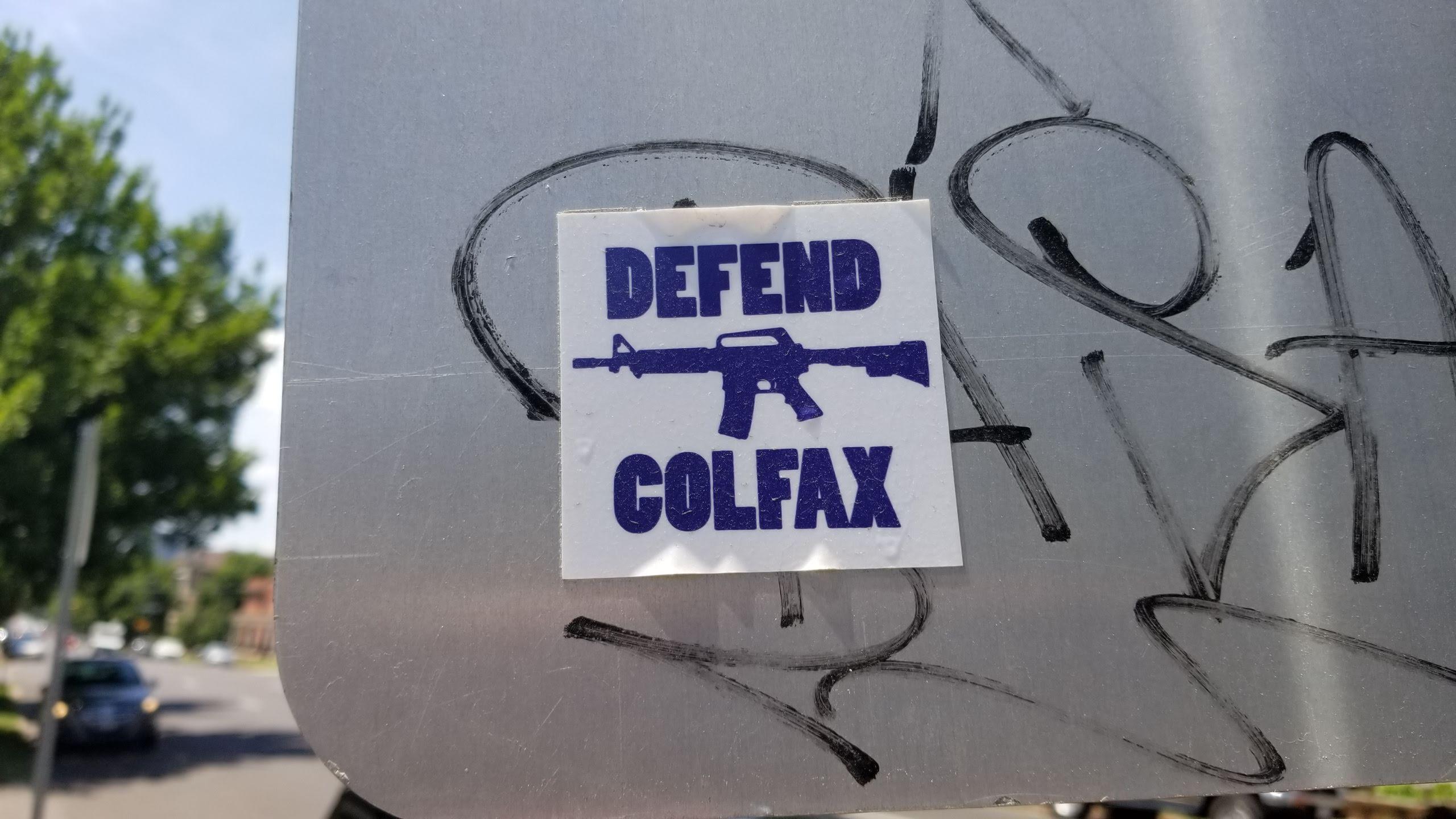
In 2011 I was eating at my usual sushi joint when I noticed an amazing sticker. Despite being on 17th, just two blocks off Colfax, the sticker immediately resonated with me. Defend Colfax. When I got home I did some searching and found it was actually one of two dispositions to the road. There were even two dedicated websites, one for Attack Colfax and one for Defend. I emailed “Luke” about getting a Defend shirt and he planned to do another run later that year. Ultimately I never got a shirt which makes me sad, because it is all the more relevant today.


The Downfall
I can’t possibly pinpoint a day, month, or even year. After 2010 and before 2020 is about all I can say. Colfax fell victim to the proverbial “frog in boiling water” (which is a myth too), where it slowly changed without really noticing a breaking point. The people, the feel, atmosphere, ambience, and vibe all shifted. I noticed little things that just didn’t feel like Colfax here and there but over time they added up. The fun and whimsical aspects of it slowly faded and went away.

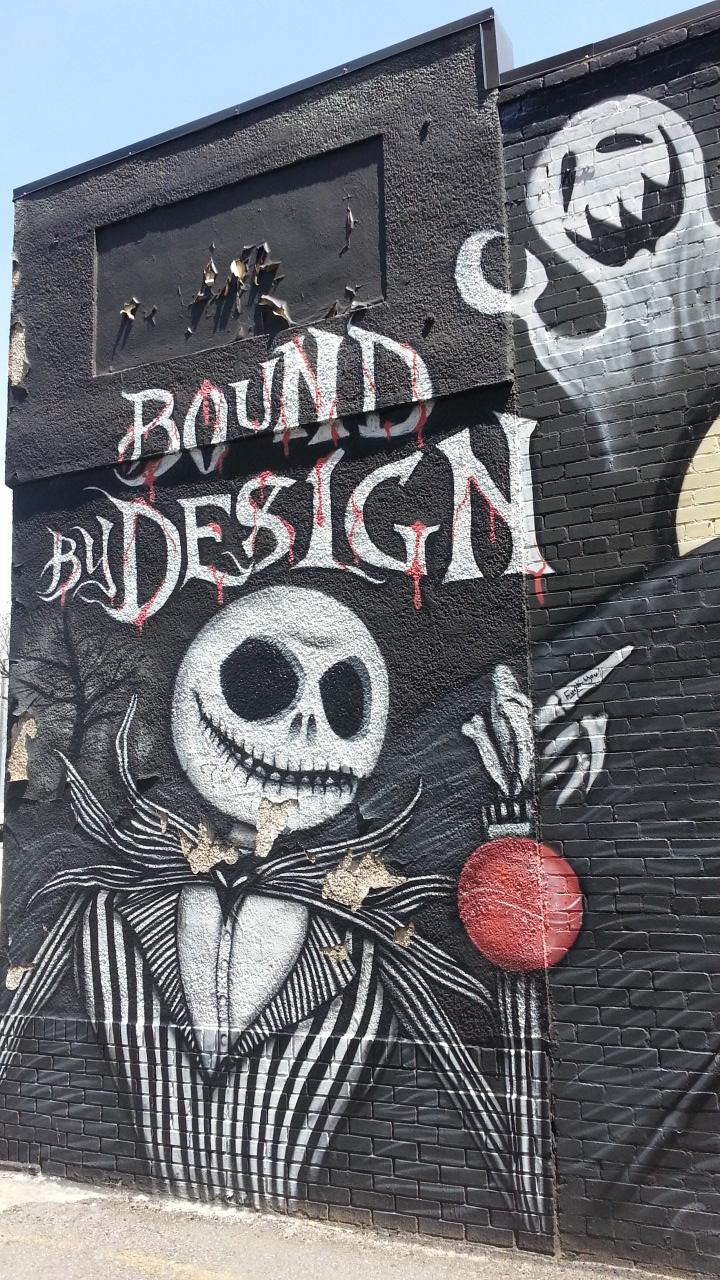

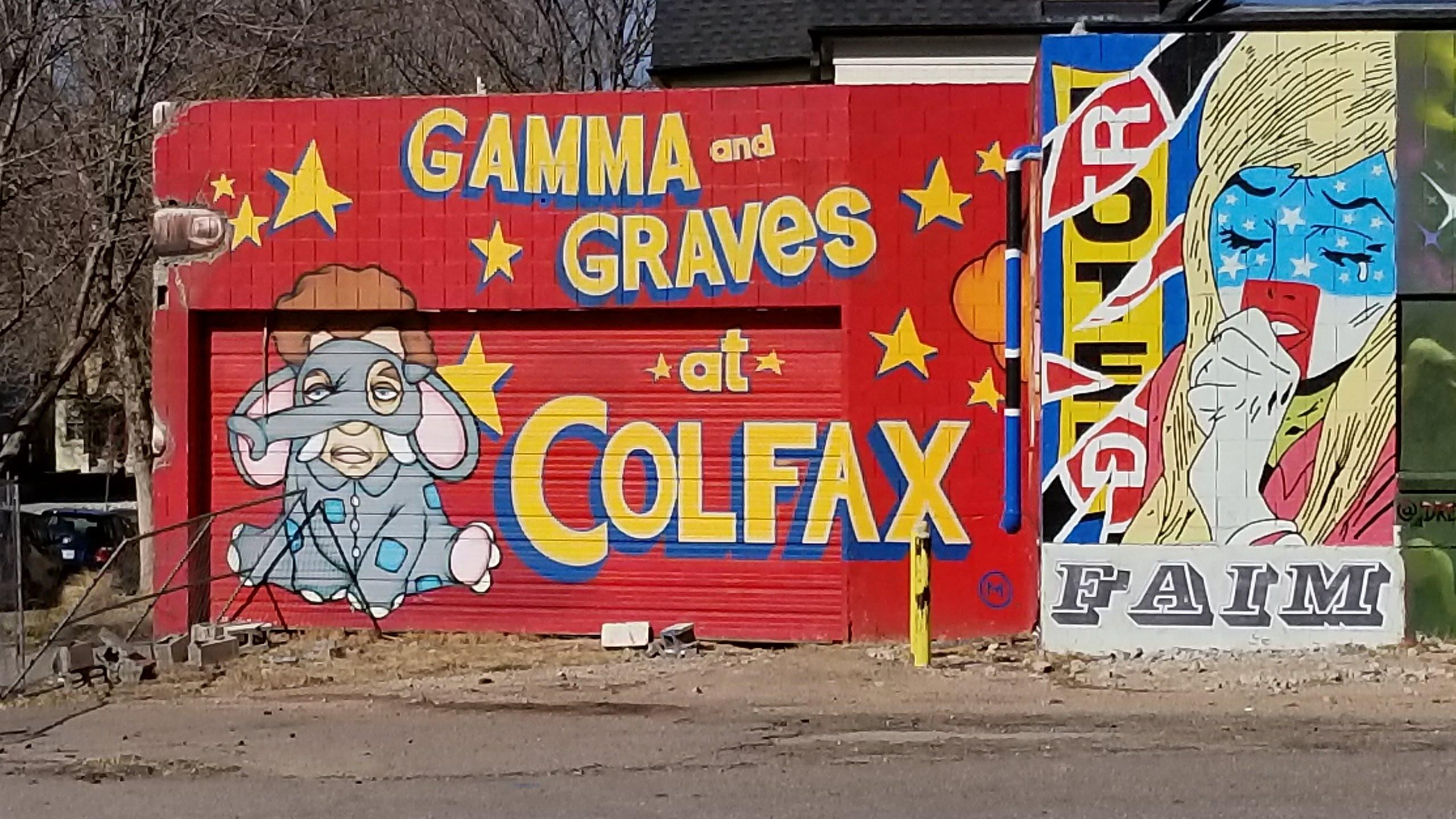
Despite that, the road still had its own unique charm and sense of adventure. Every trip down the road almost guaranteed seeing something peculiar, odd, or just plain weird. When driving, if I had a chance to take the road I would, even if only for a few blocks. It was akin to playing a lotto scratcher ticket hoping for that $20 or in Colfax’ case, something fun and different. For over two decades my route frequently took me through the Colfax and Grant intersection where Capitol Hill Books is located. A majority of every book I have read since 2003 has been donated to them to help support the local business. The store is still open to this day which makes me smile every time I drive past, and even typing this now.

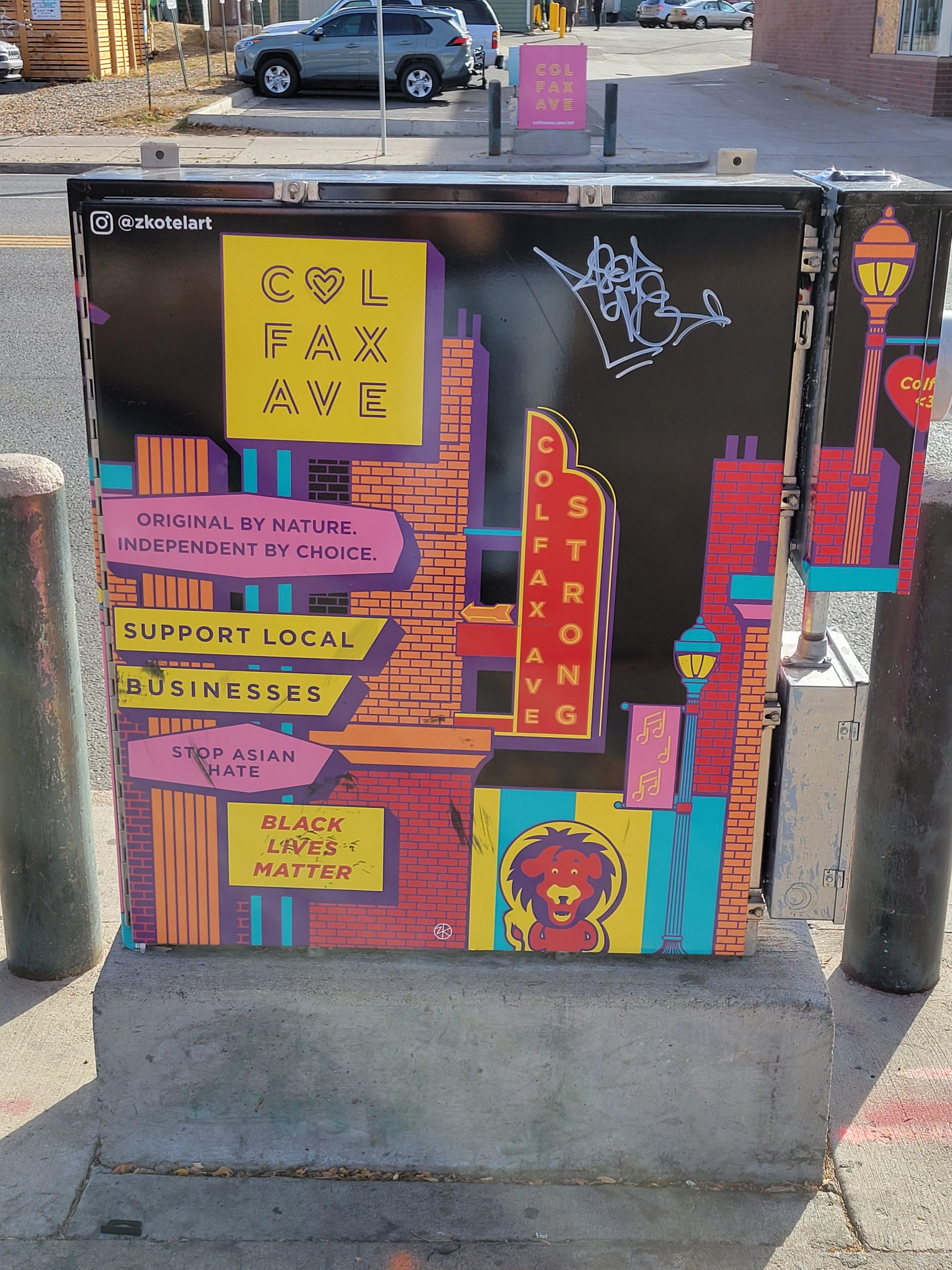
Nail in the Coffin
Just over three years ago I moved out of Denver to a new home in the mountains. Largely away from humans and squarely in the realm of animals. While I still drive into the city once a week, and often by Colfax, I don’t have the same exposure as I did for 21 years. On Sunday I had a chance to remedy that by walking from the Capitol to the Bluebird Theatre for a concert, almost two miles. I started at 5 p.m. and arrived just after 6 p.m. due to a couple stops along the way. After getting some epic French fries and a soda from Gyroz I walked about half the distance before realizing the road was nothing like it used to be. The ‘why’ this time is pretty straight-forward.
In October, 2024, the city of Denver began a huge project to overhaul Colfax to improve public transport. That construction just finished weeks ago after two long, very painful years, interrupting the daily lives of hundreds of thousands of Denverites. The construction was directly responsible for some businesses shuttering and others limping along hoping to survive it. Not only did it remove the limited parking on Colfax itself, it made navigating the road difficult and stressful. People simply avoided the road instead.
The gist of the overhaul was to remove parking to make room so that two dedicated bus lanes could be added to the middle of the road. But that required bus stops; concrete islands in the middle of the road. That also means no more left turns when traffic was clear, now replaced with dedicated left turn lights. Those two years resulted in one of the most heavily trafficked sections of the road fundamentally different than it had ever been.
I understand that concluding the two-year project means it will take time for things to return to as normal as possible. But my concern is that it won’t return to whatever “normal” brand could be applied to Colfax. When a 7-11, Papa John’s pizza, and others can’t stay open on a heavily trafficked road, it says a lot. According to 9 News, 30 businesses closed but 29 new ones opened. I consider that dubious at best for many reasons I won’t get into because while that is my nature, it doesn’t matter for the sake of this blog. What matters is the end result.
Coldfax
One mile after ordering fries, half a mile after finishing them, and I was on my phone recording what was to be the entire blog. Days later though I felt I had to give a better introduction to explain how visceral the changes are to me. I recorded the bones of the blog but now it ends up as the last section of it instead. Just weeks after construction was officially over and the buses are running and the road feels like a ghost town. There is no warmth, no vibrant city feel, and certainly no “weird”. The rest of this section is touched up from my notes while walking Colfax, or more aptly named now, Coldfax.
A Sunday night should be pretty prime-time for Colfax, full of life and people going to bars, restaurants, and concerts. Over 30 minutes of walking, I saw just three buses and all but one bus stop empty. One stop at York / Josephine, which is another major artery of traffic, had a whopping five people waiting for a bus. Otherwise, the road was dead. I can bold that, I could underline it, I could make some graphic of shiny glitter exploding over the word “dead” and it wouldn’t do it justice. I passed less than 10 people in two miles on a road that used to have me pass hundreds in that distance.
One complaint many residents had was the unhoused and transient population that gravitated toward Colfax. They aren’t wrong, but that largely represented a mild inconvenience at best and is no different than large swaths of the Northern downtown area where the paltry social service offerings are. Due to the traffic, lighting, and central nature of the road, crime wasn’t near as bad as some might expect or claim it to be. Yet, walking to the concert on Sunday I saw slightly more unhoused sleeping on the sidewalk than I did citizens going to businesses. Walking back after the concert around midnight, there was an increase in the unhoused and I saw two hand-to-hand drug deals. That part hadn’t changed at least.
I didn’t run into any drunk people asking me for money which felt alien to say the least. While I enjoy the privilege of being a male, not once did I feel unsafe. And I have felt that way on Colfax a few times in the past. Busses were still running at that point but I think I saw one, two buses at most. In short, the road just isn’t near as vibrant as it used to be and that makes me sad. According to the city:
A Streetcar Feasibility Study was conducted in 2010, followed by a more detailed 2012 analysis of current and future needs along the Colfax corridor. In 2018, following six years of outreach and community input, 75% of the public recommended center-running bus rapid transit (BRT) as the preferred design alternative. The design process and environmental review began in late 2020 and was completed in 2024. Construction on the project began in October 2024.
That is odd to me, for someone living two blocks off Colfax, as I don’t recall getting any surveys like this. I wonder what 75% of the public recommended this solution? Was it limited to people living along Colfax? People that hold a bus pass? Businesses along Colfax? Because it seems like whoever ultimately signed off on this project shouldn’t have their job tomorrow. But, let’s give them the benefit of the doubt to the person(s) who architected this and at least six months to see how the new traffic configuration and bus lanes play out. Do the empty buildings come back with businesses ready to serve the area? If after a year the road is still largely dead, that is a person or group of people that shouldn’t work for the city.
The Colfax bus rapid transit (BRT) project has all the hallmarks of when Denver moved the airport from a very central location to the open plains North East of the city. Sinking runways, a 560 million dollar baggage system that was scrapped due to problems, a toll system that was arguably fraudulent and has sat unused for ages, roof issues, and even ongoing controversy about “penises” plaguing the airport’s art. The person responsible for the big Denver Airport move? Federico Peña, former Denver mayor, whose name adorns the long highway out to BFE and the new location. His reward for that fiasco was being appointed as the United States secretary of transportation. You can’t make this up.
What the $280 million dollar project did not include was doggie poop stations. In the 20+ years living close to Colfax, I don’t recall dog shit being a problem on that road. But it is now. I had to walk around several piles of it at various points. Every morning cleaning crews attend to the bus stops along the way, but not the rest of the road. Trash cans at every block or two are great, but only if people use them.
Jumping back to my comments on the unhoused population, or lack thereof, I think that is actually pretty telling. One might say it is a litmus test of sorts. It used to be a bigger issue because they would congregate along Colfax because that is where the money was. Asking for handouts was more lucrative there due to the traffic. The fact that I got asked for money a single time in two miles, each way, is damning. I used to be asked for money at least twice before I got to Colfax, just two measly blocks away, and another half dozen times walking half a mile along the road. That says a lot about how time and this project have changed the road.
Finally, all of these changes to make Colfax more accessible to the masses and provide better transit down the road, and I didn’t see a single police officer or car for my two mile walk to the concert. I saw two cruisers on the way back but they weren’t patrolling Colfax itself. Each time they turned on Colfax briefly and were back off the road shortly after. Not that they ever did anything about people breaking traffic laws, even ones that are incredibly dangerous like E-bikes and scooters going 15 – 20 miles per hour on the sidewalk which is breaking Denver law.
To sum it up; Colfax used to be fun and weird and a bit scary at times. Now it is a shadow of what it used to be. In the past, I almost beamed with pride telling friends that visited Denver about Colfax and how fun and interesting it was, how the people watching never got old. Now, I have to remove that off my concierge list apparently as it is just another boring street that feels like it was abandoned. That warmth and depth I cherished is gone, and the road just feels cold and depressing now. I’ll miss my old Colfax dearly.
I’d rather not leave on such a sour and depressing note, so a few more select pictures along Colfax. While going through almost 25 years of pictures, I kicked myself realizing that I didn’t take many of the street life. So many were taken within a few blocks, but not actually on Colfax.
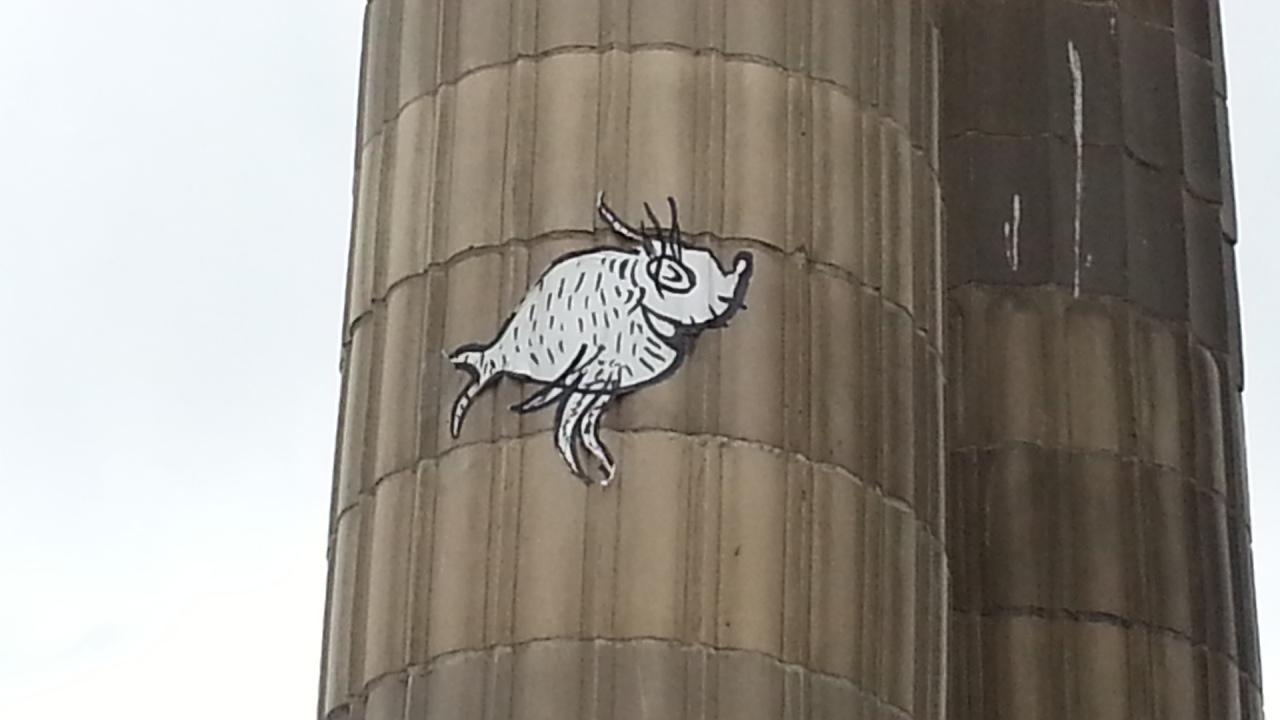

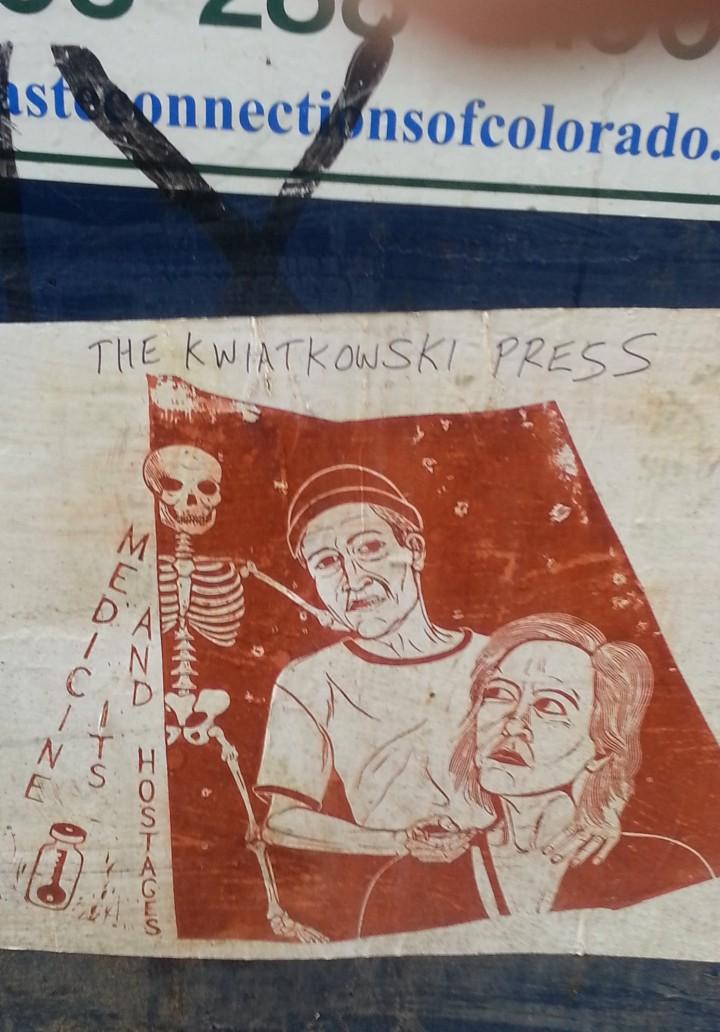
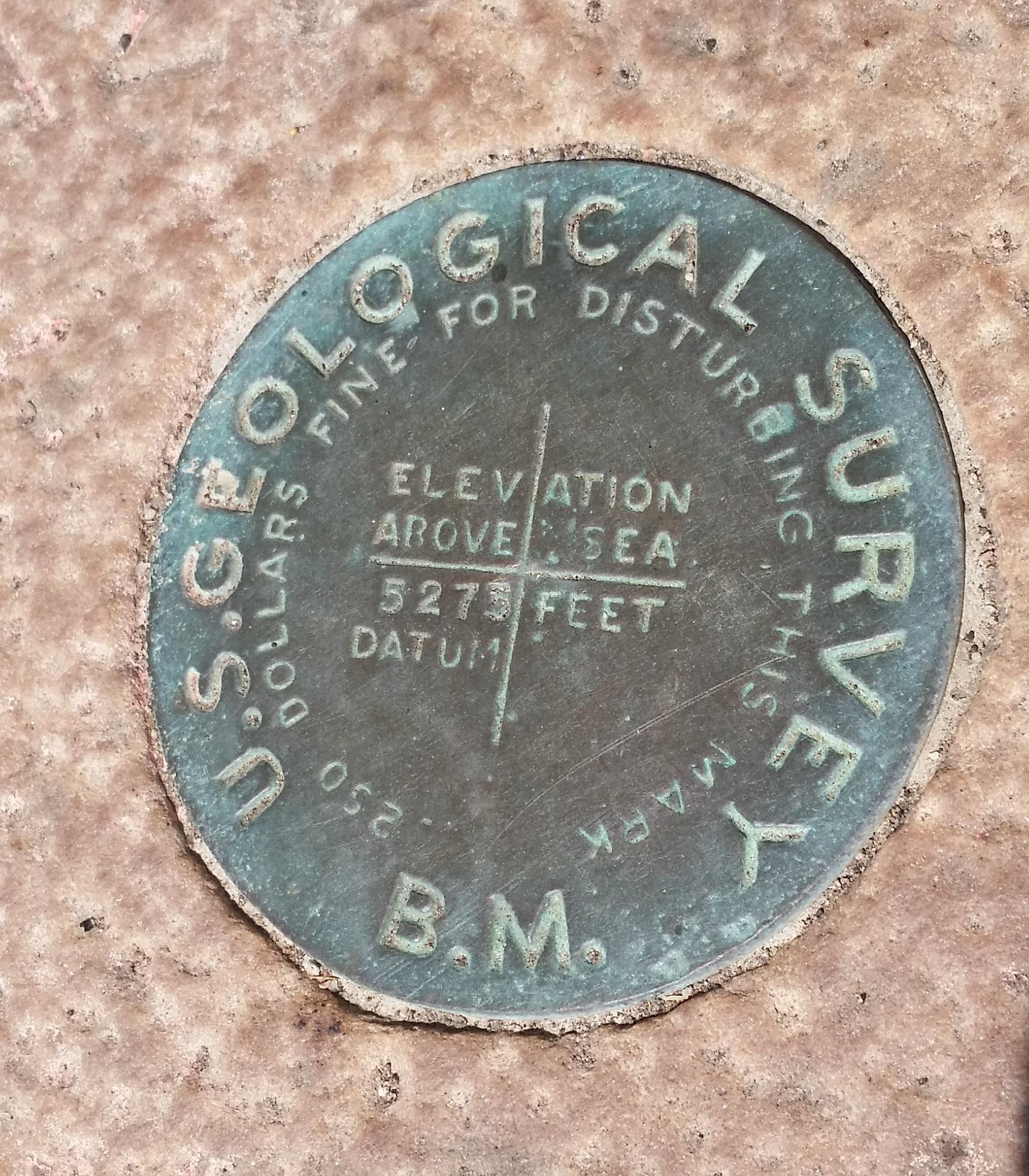
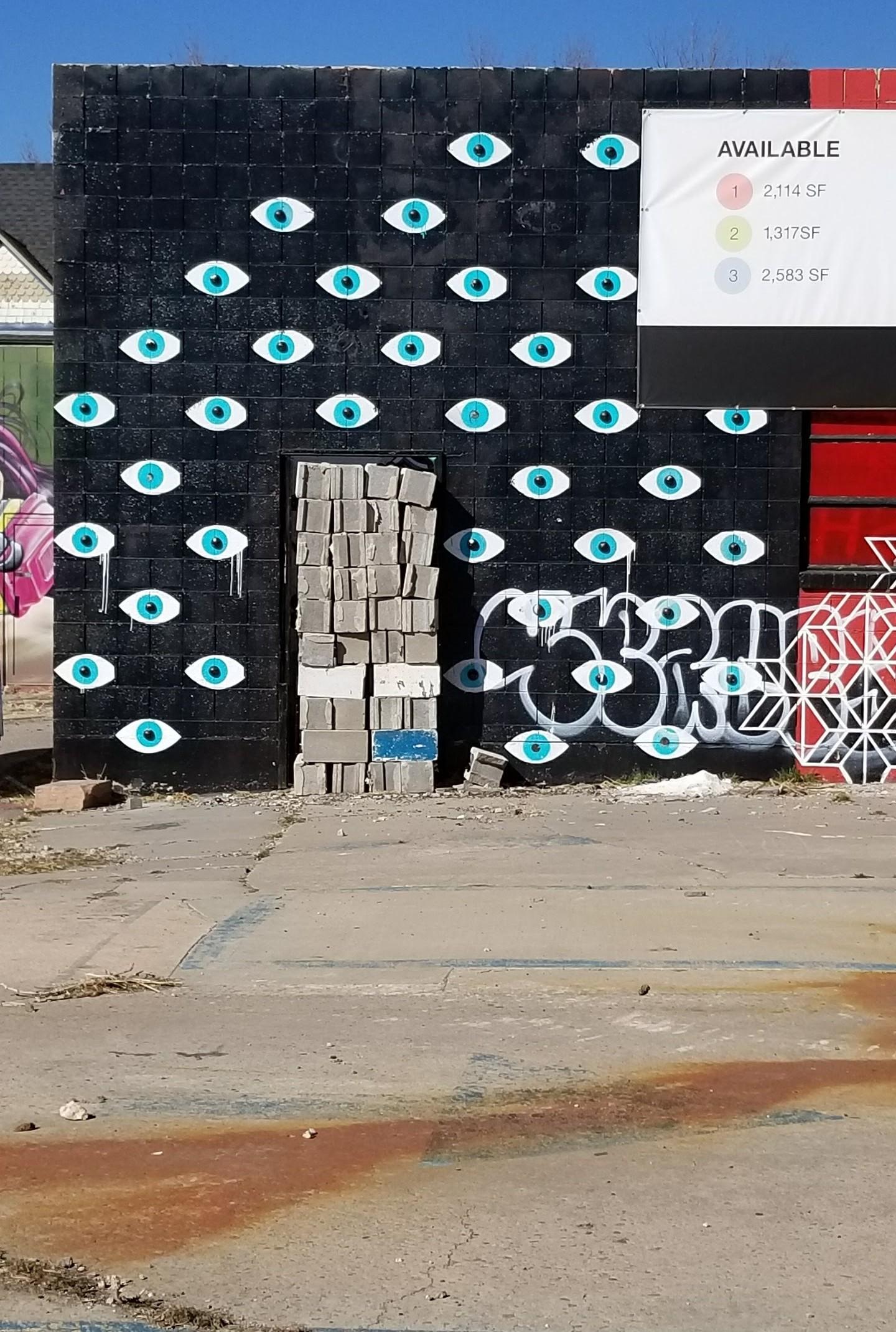

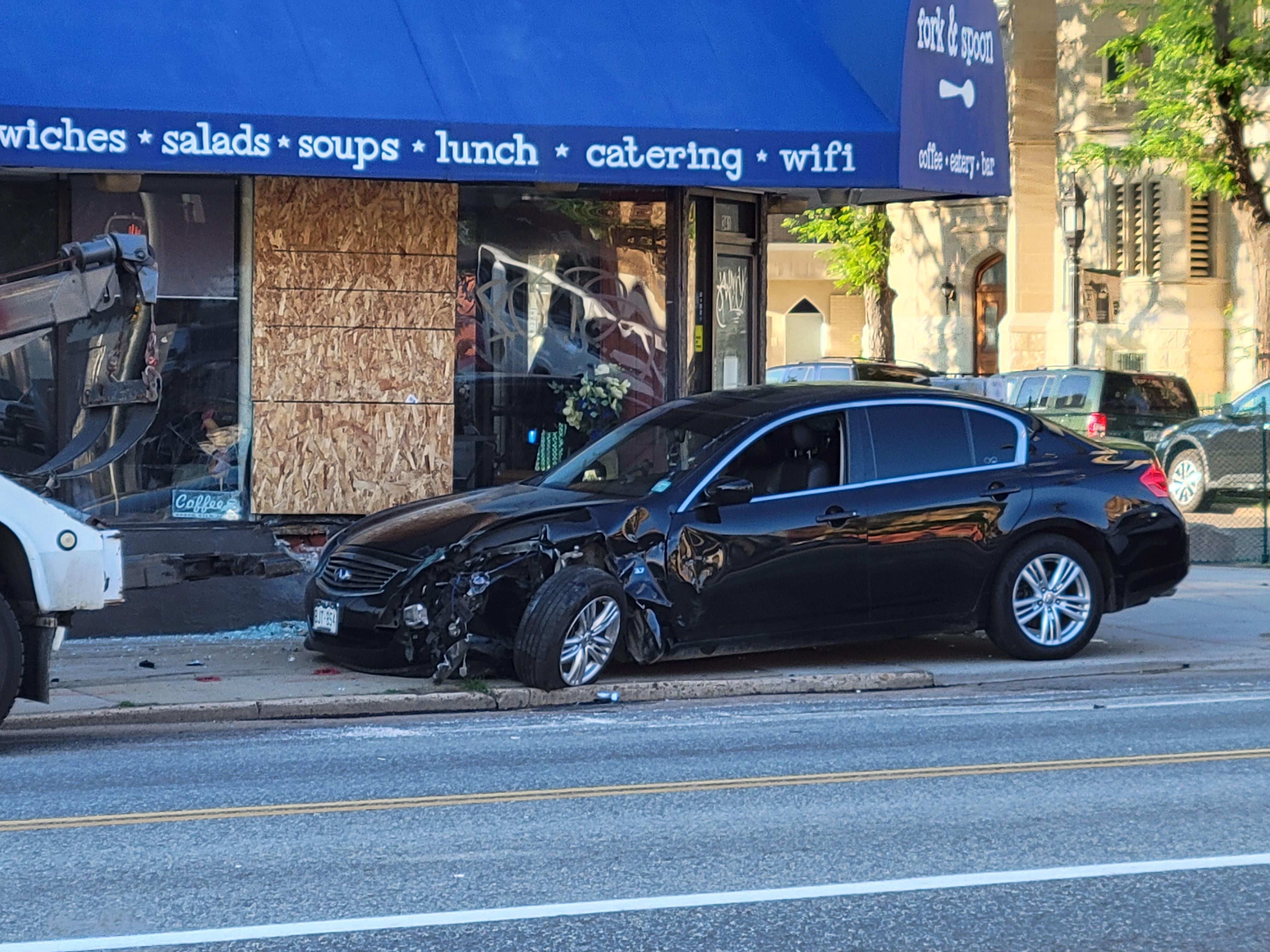


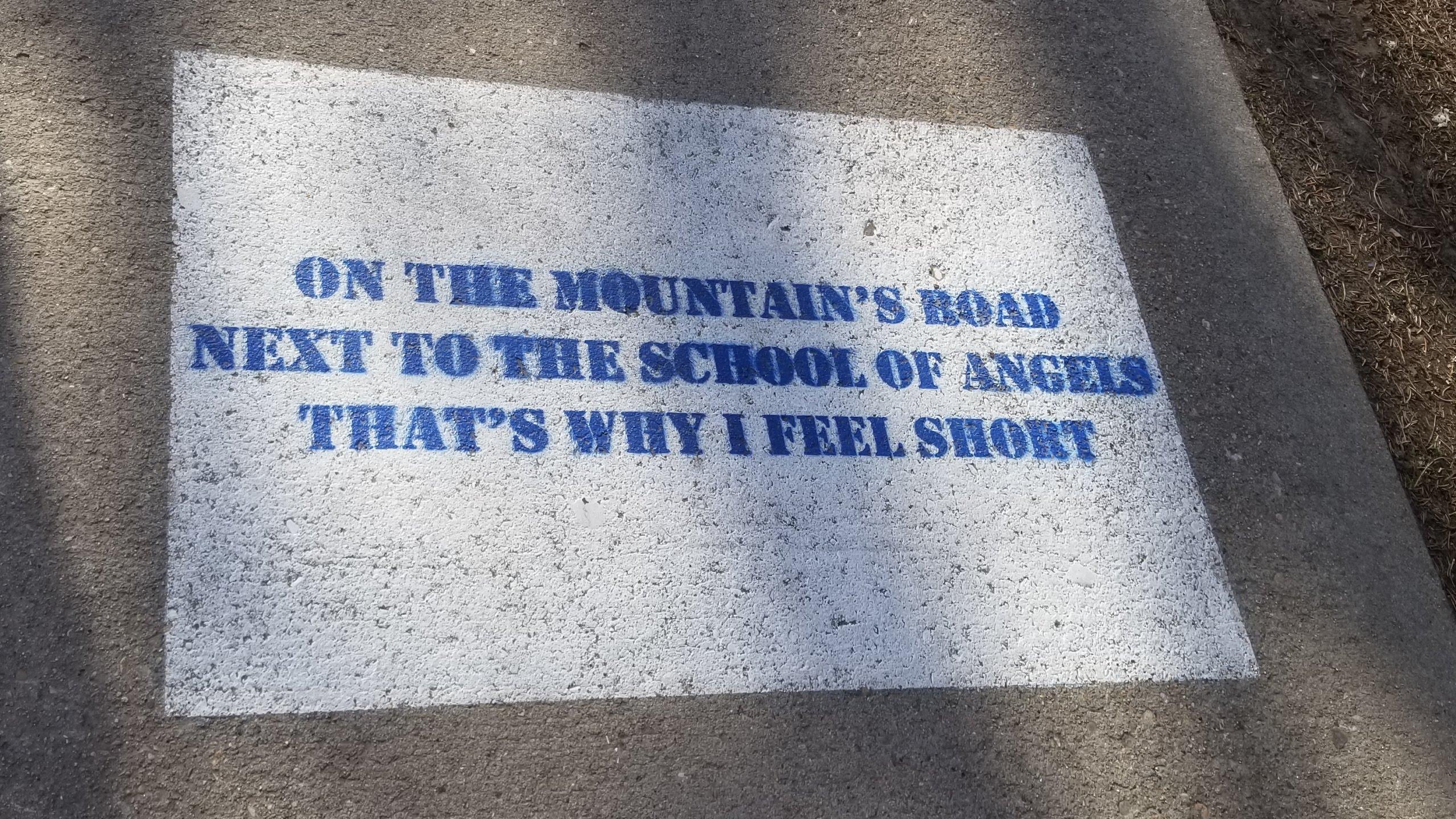
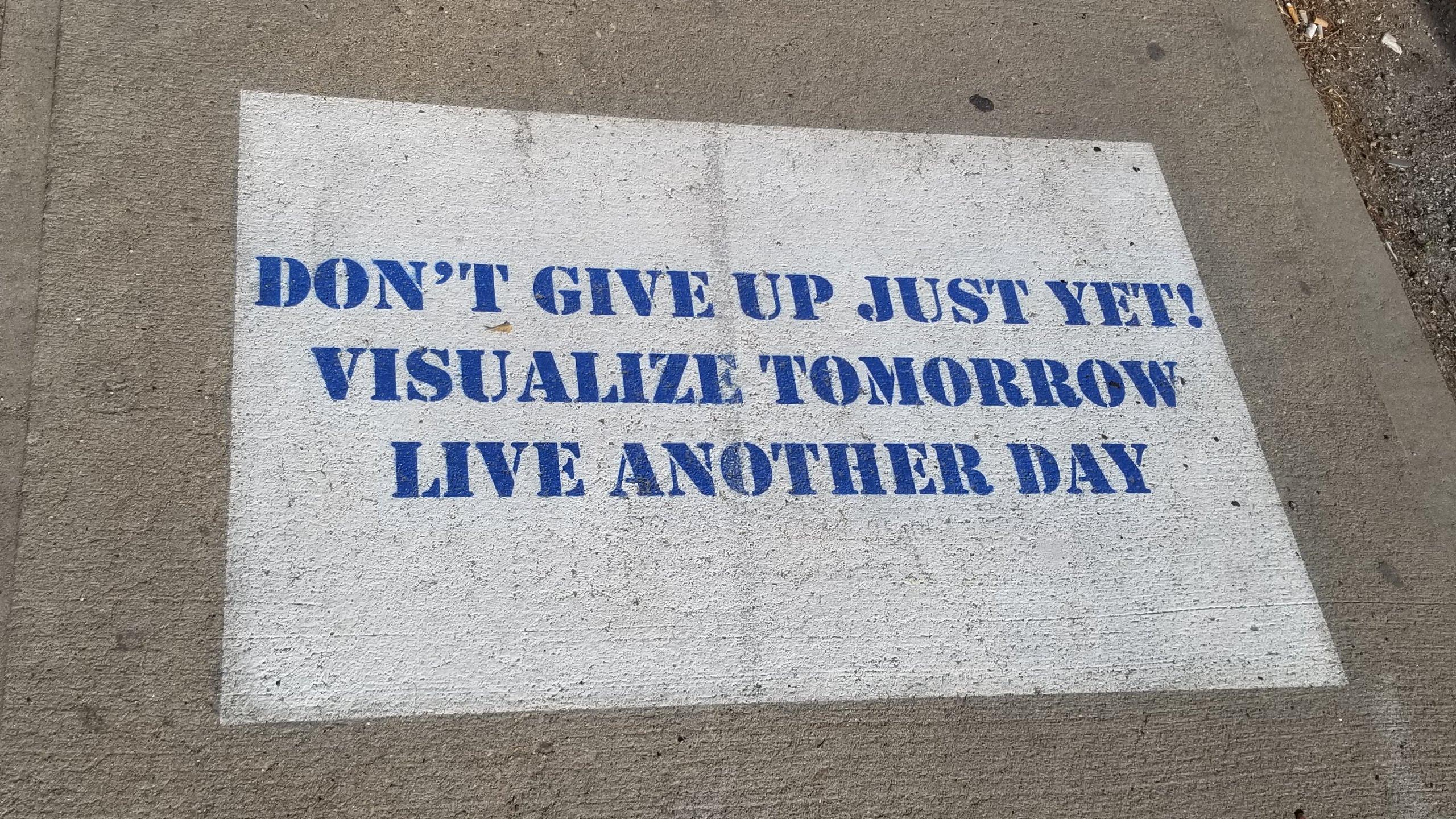
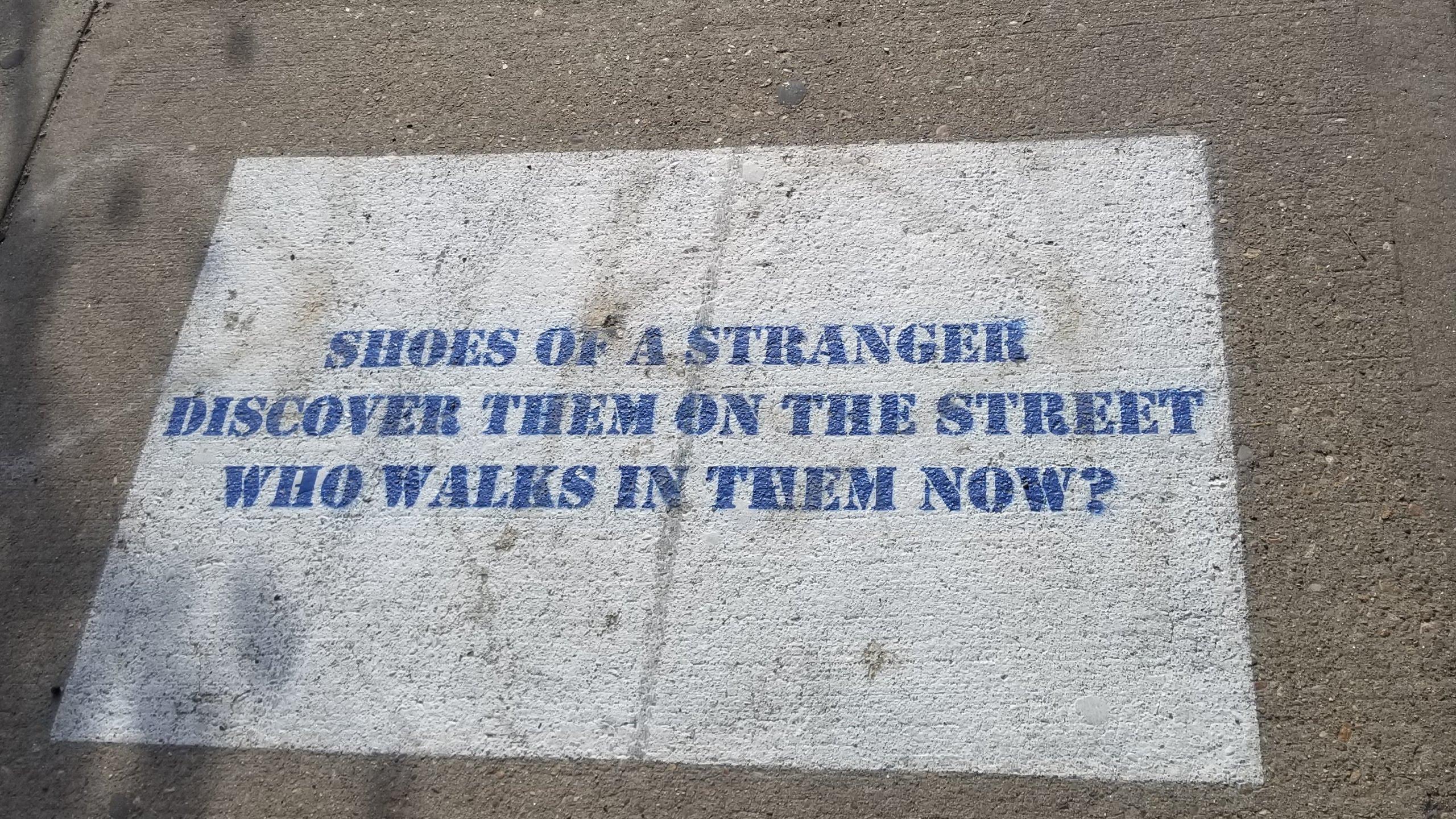
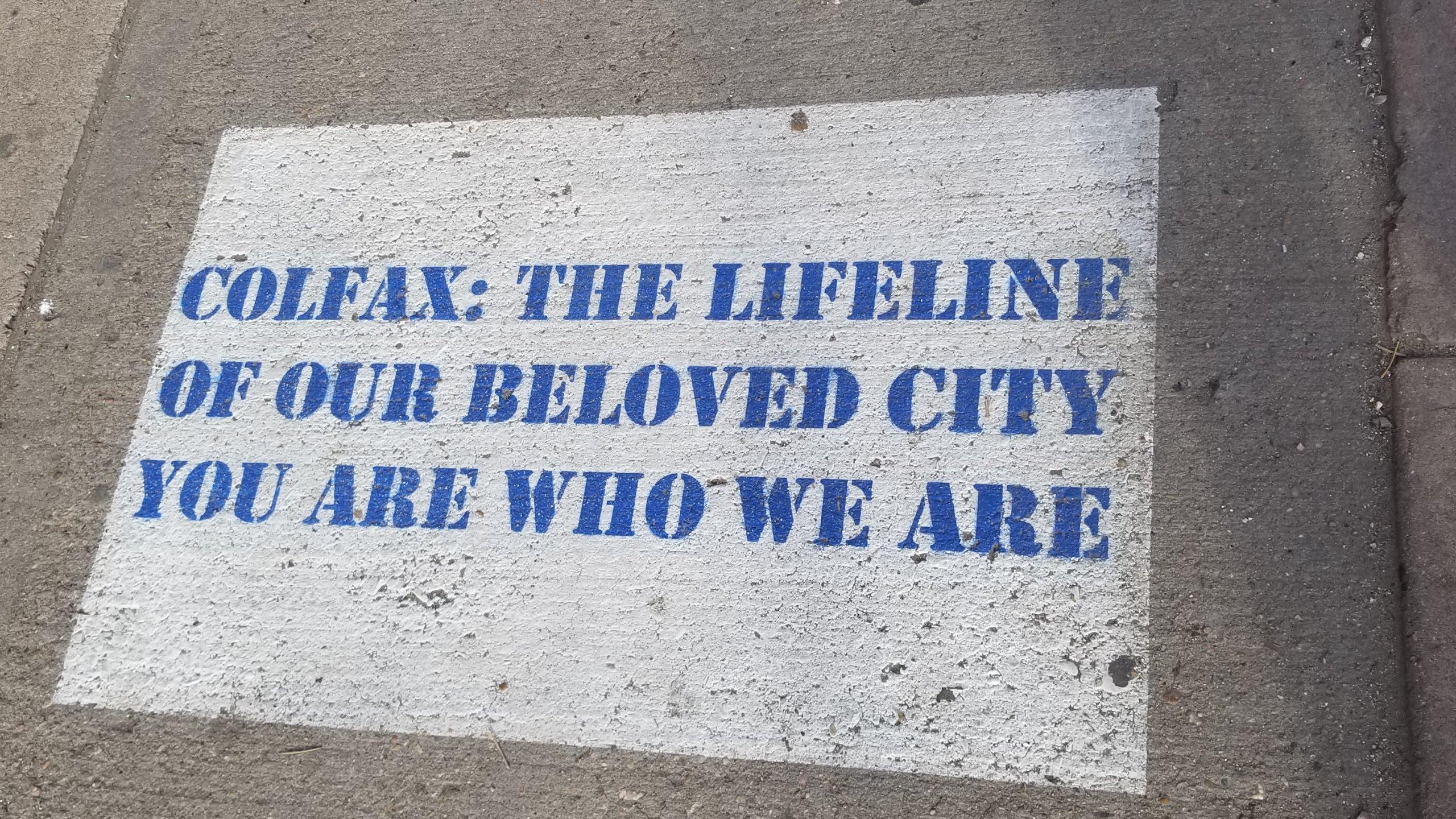
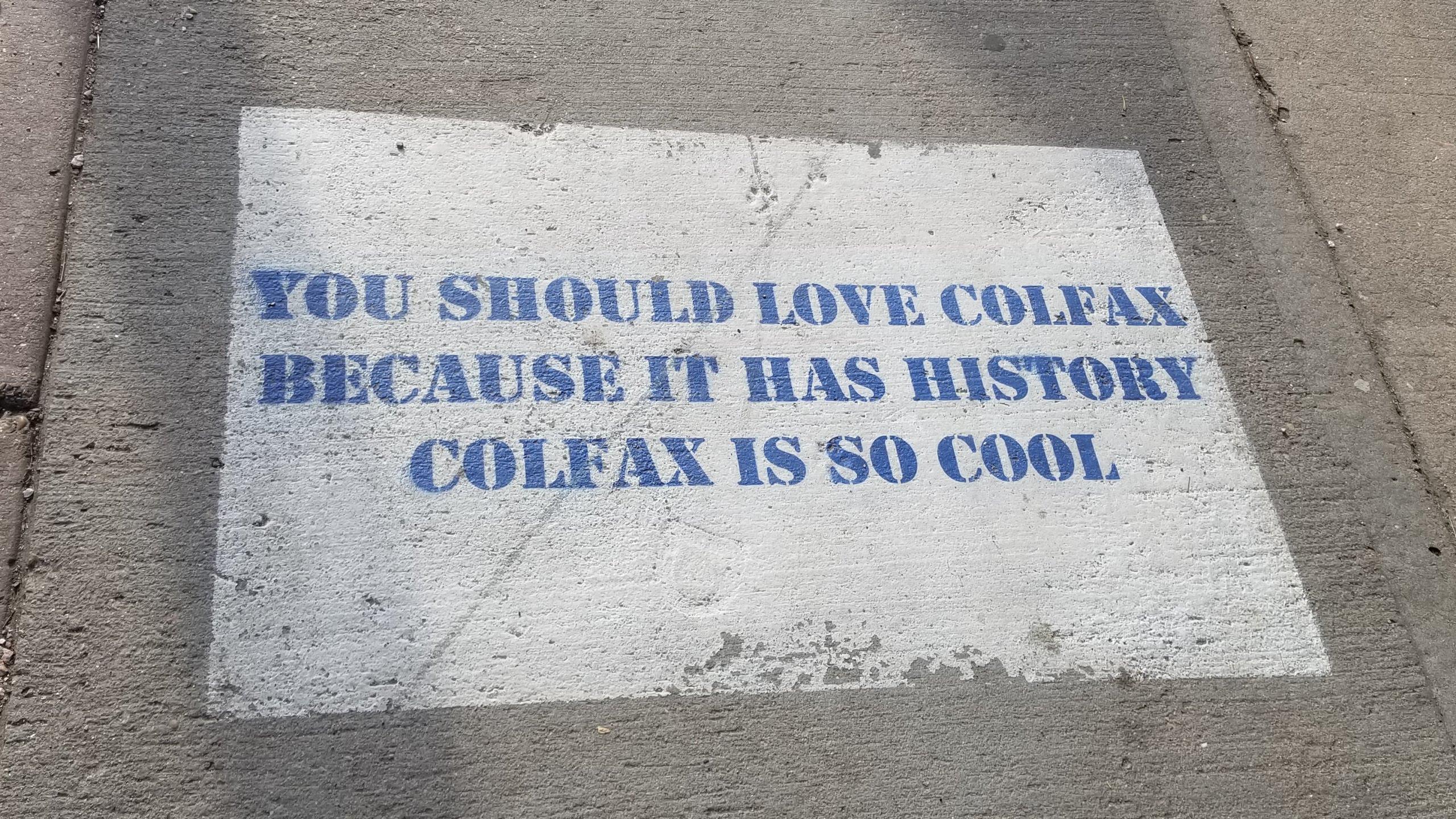
In 2021 there was some art project or another that had stenciled quotes about Colfax and Denver life along the sidewalk for a few blocks. I don’t recall when that was other than me taking pictures in April, 2021. But I stopped to read and take pictures of every single one because they reminded me of how much the road meant to people.


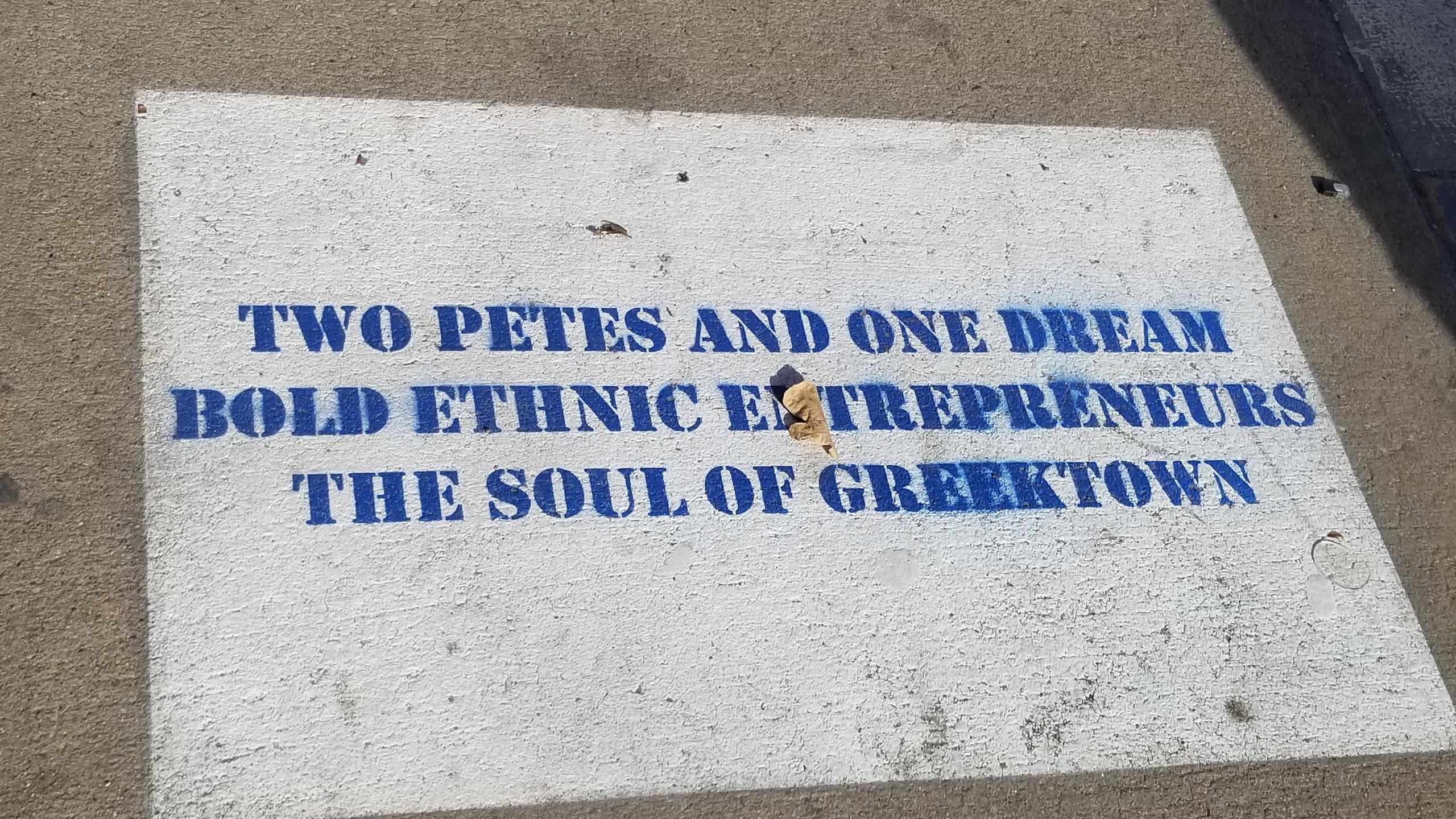
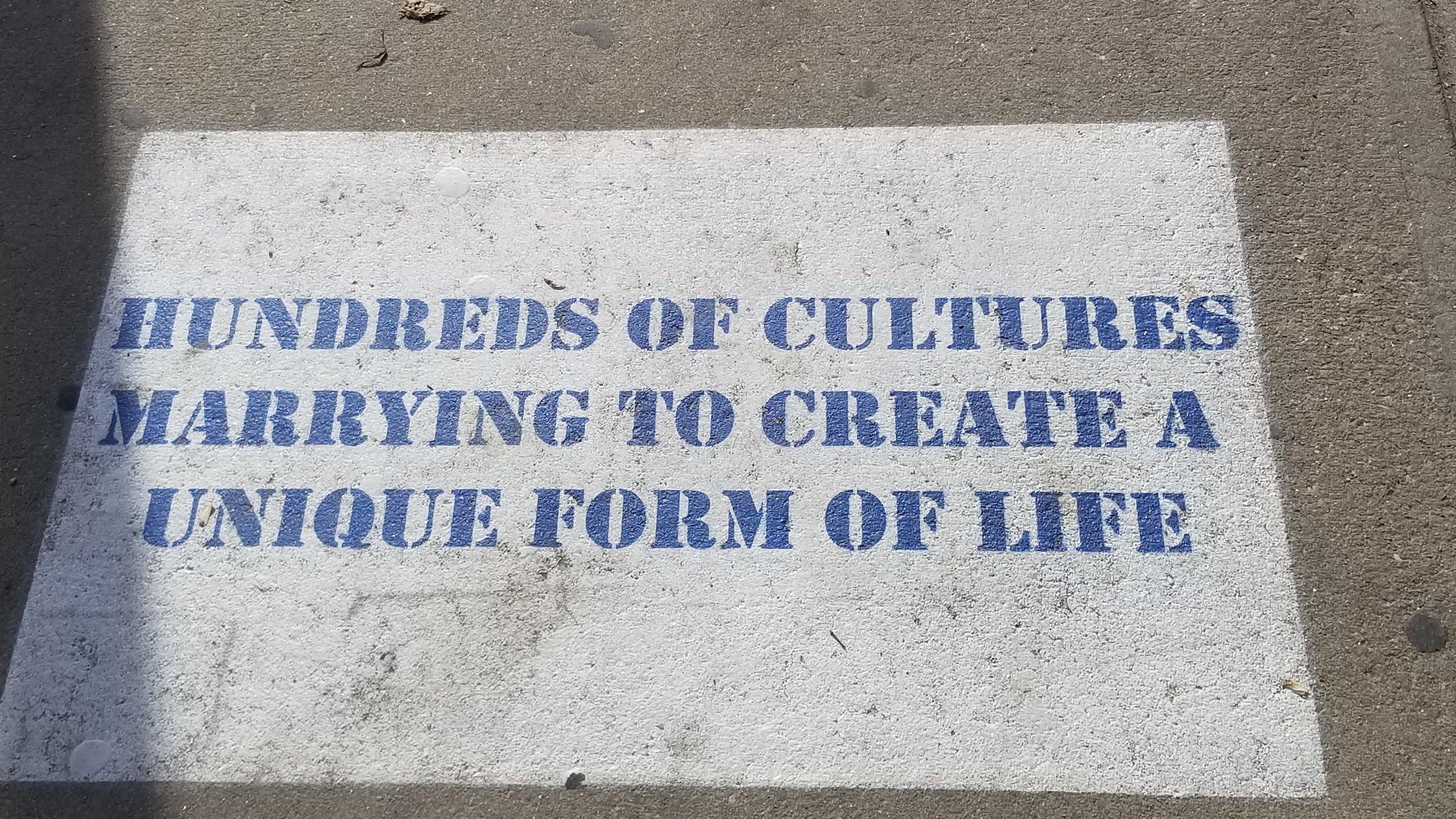

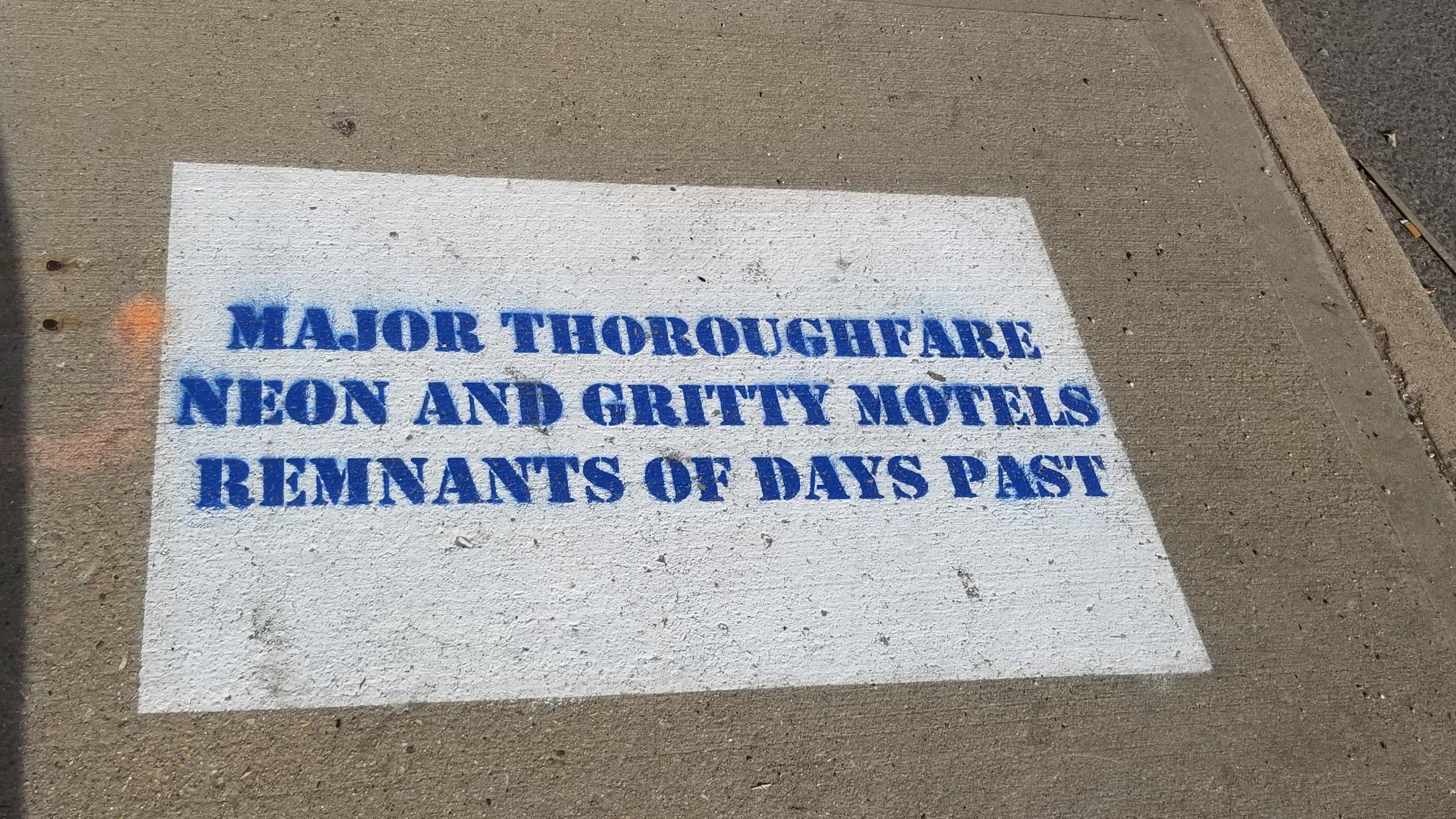
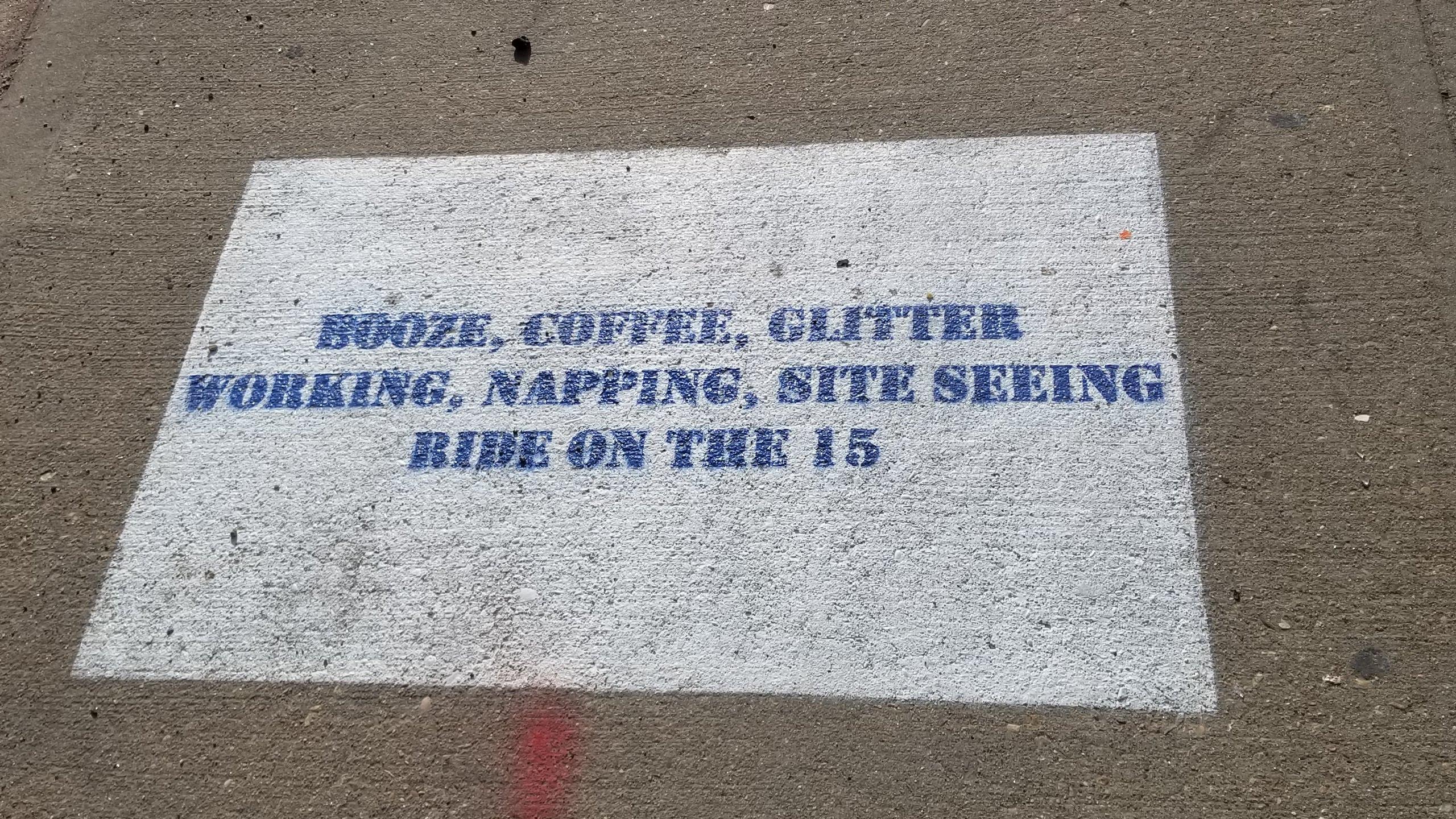


Finally, the Wellington E. Webb Municipal Office Building is on Colfax near the Capitol. Facing the beloved road is a significant quote etched into the building in big letters. While Colfax was the home, thoroughfare, and destination for so many people, this quote embodies the inherent value of the area:

Leave a Reply