Reviews
Class of 09 (2023) is a single-season mini-series story with no cliffhangers, which is appealing. The series follows four main characters in three different time periods including their time at the FBI Academy in the past, present time (2023 or so), and the future. You don’t just follow the agents, but you follow the development of an AI-based system intended to be fair to everyone regardless of age, color, or race. Of course that doesn’t work out so well, but how the story handles and resolves it is the reason to watch. Kate mara plays Ashley poet and the story revolves around her more than the others. Despite that, Tayo Michaels played by Brian Tyree Henry is the standout character and actor to me. The way he talks, where everything he says is thoughtful and meaningful, delivers a powerful performance.
Neighborhood Watch (2026) is basically a modern blooper show taken entirely from home security cameras. Ring doorbells and regular security cameras provide the footage and contain all of the traditional bloopers (slips, falls, etc.) and more modern ones with delivery drivers, cars not put in park, and more. The craziest part of the show to me is how many people have cameras in their house, and even their bedroom. By that, I don’t mean pointing at the bedroom door, rather pointing directly at the bed.
Steal (2026) is a drama thriller centered around the victims of a heist with some solid twists. Astute watchers can likely figure out some of the twists early on, but by the end of the third episode it gets much deeper. Better, there is no egregious writing that gives everything away either, so you might predict some of what was to come or might not. Nothing in the show screams particularly stupid or unbelievable which is a nice change of pace. Little bits in the first episode that stood out to me weren’t explained away immediately like a lot of U.S. shows like to do since they treat viewers as idiots. Instead, the show took time to give the explanations and develop the story. That’s good writing.
The Physical 100 series on Netflix is a surprisingly incredible stand-out reality show that started in South Korea and has since expanded to include more shows in Asia and years later, in Italy and Mexico with more countries coming. The first show is based in South Korea with subsequent seasons of Physical: Asia that pits several Asian countries against each other, a four episode season titled Physical: Welcome to Mongolia that saw a few of the winners of the prior season visit Mongolia to reunite with competitors from the season, and then additional spin-offs in other countries. After Italy and Mexico, it looks like France and the United States are coming soon. I will bet a shiny nickel that the U.S. version breaks the mold and turns into trash-talking slop where the prior seasons showed incredible sportsmanship, respect, and camaraderie between the athletes and teams. One nitpick with Italy, during the first episode as contestants walk into the room the announcer says the show is “unprecedented” which is ridiculous.

General Thoughts
How many movies have a character that, under some stress or another, drinks straight from a liquor bottle, takes too long of a pull and then nods their head slowly with eyes closed before, with the bottle in the same hand, uses the back of that hand to cover their mouth like “Oh my God that was too much…” when in reality that certainly isn’t how people react to drinking strong booze? Way too often.
Media Content Warnings & Ratings
The current modern movie rating systems are wild. I understand the old ones were not granular. You had G, PG, PG-13 (which came later), R, and NC-17 that were admitted by age. All ages, 13 years or older, under 17 if accompanied with a parent, or over 17 years old. These days that seems arbitrary but society has shifted dramatically. Young kids routinely see things on the Internet that used to require you to be 18 years old to see. Those ratings were all you got early on and no justifications or explanations came with it. Eventually that changed and you got a few warnings like “Language”, “Substances”, or “Nudity”. That gave way to a more modern take on things but the MPAA of course was deeply-rooted in their old-fashioned ways despite criticism and even then, they turned to legal action in a desperate attempt to stay relevant.
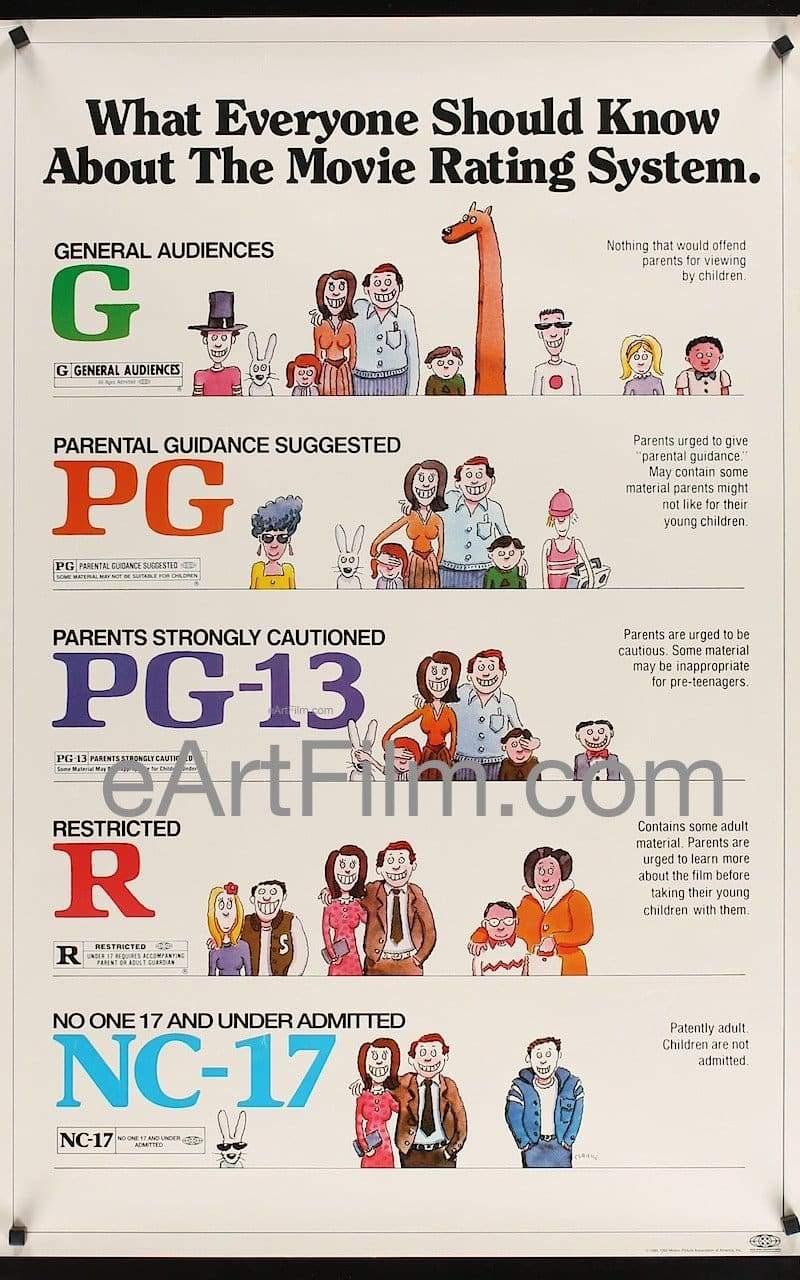
However, I have to ask if it has become too granular, to the point of being as confusing as it is a warning. During the movie “The Fifth Wave” there is a warning of “Brief Teen Partying Scenes”. What does that mean exactly? Are we talking about a 13 year-old birthday party or a bunch of 19 year-olds drinking, doing drugs, and having sex? Then there is the problem where a TV series of six or more episodes will carry the same warnings that may include e.g. “Nudity” when in reality, just one episode may have ever-so-briefly flashed a nipple that you would have to pause and slowly move frame-by-frame to see if you wanted.
All of the current systems, plural, since it is largely up to each network how to warn viewers, do not seem well thought out. Too broad or too granular warnings, confusing summaries, inconsistent application of said warnings, and other problems mean that viewers have tuned it out. If there isn’t a parental control set on an account, the kids will watch anything Netflix has to offer. While it may not be NC-17 “porn” or worse in your mind as far a that category goes, it can be much worse when shows have serious violence, graphic rape scenes, and worse.
The Premature Drama Problem
One of the biggest problems with modern media, be it TV or movies, is that the earlier the drama happens the less it is effective because overall we know the hero will live, we know who the villains are, and it instantly becomes routine. In short, if episode one or two has a huge drama-intense scene, show writers love to overplay their hand if I am being generous. In reality, they are just dumbing things down for viewers because many are idiots and they would rather cater to them. If an obvious hero comes out relatively unscathed for example, we know they live until the end. That’s one reason why Game of Thrones was such a hit. Ninth episode of season one saw the demise of who we thought would be a long-standing character since played by an A-list actor.
Another example, in the Netflix series Wednesday during episode one of the second season, the main character is crawling through a bonfire, quite literally. There’s no drama around it because we know she will get out of it. She has to, the show is centered around her. We even know that the reason she went into the fire means she will almost certainly retrieve what she is after. So not only do we not fear the main character dying, even with a minor plot point we don’t fear the item being destroyed either. The secondary characters are basically guaranteed to be safe as well in too many series so it does not make for any real drama these days. Game of Thrones bucked that trend and stoked actual drama because any fight or interaction was an unknown element if any character would survive no matter who the actor was or how important they seemed.
Villains & Serial Killer Appeal
It’s easy to make serial killers look good in movies, documentaries, and true crime series because as weird and messed up as they are, they’re not working nine to five, stuck in jobs they hate, or in marriages they can’t stand. They’re living their best life, no matter how sick it may seem to others, and so many ordinary people are jealous of that even if in a tiny way. It’s the same reason they watch shows about millionaires and dating lives that they can’t have. Kind of odd you tune into two wildly different shows for the same emotional reasons. That seem right to you?
Many movies rely on us hating a villain to have an emotional connection or to have feelings for the hero or underdog. But here’s an interesting question: what movie that involves any form of hero or villain is the first that comes to mind? For me it’s Last Knights with Clive Owen and Morgan Freeman. You talk about a movie giving me anxiety, it’s probably one of the very few ever that actually has because the villain so wrongs the heroes. I love to hate the villain and it makes the end so much more rewarding. The writers, director, and actor did a wonderful job painting a picture that invoked such feelings. They deserve an award.
50 Cents, the Value of His Acting
Curtis Jackson is clearly the worst actor in the industry in my opinion. If you think, “oh, it’s his style, playing it coy in any given role or whatever” then no, I think you are wrong. Compare him in a movie to him in an interview with Steven Colbert for example. It’s the same dead expression, no real life, absolutely no emotional range in the real world, and seems boring as hell. He can’t conjure up any real range in the acting world either as a result because he has none in life. He’s basically the dead fish handshake of acting. He’s almost never truly the main actor either, which of course, no one would watch that bomb. And I bet that while he may be listed as an executive producer, he’s not listed as a director or writer for many of the movies he has smaller roles in. He’s a producer in the movies he helps bankroll.
Magic vs The Rest of Reality TV
Whether you like magic or not, one of the simple but brilliant reality shows that aren’t spoon-fed to you like Survivor and others is Penn & Teller: Fool Us. This is a pure magic show, and one where the old-hats call out the new for the most part but in a fun way. Shows like American Ninja Warrior (ANW) present some drama in that there is not likely to be a winner at all, but you have to stay tuned the entire season to see. Basically, on a per-season basis where Fool Us does it on a per-show basis. For the most part, there will be at least one winner every show because it would likely get a bit boring if no one ever won. But the brilliant part is, even with a single winner out of three any given episode, you are left wondering which magic trick will fool two career magician outcasts.
Now for the flip side of that praise! Almost every episode has at least one winner, so I have to ask Penn Jillette and Mr. Teller… doesn’t that take away from your credibility? Eleven seasons in and guess what… your show is great! But if there is always a winner? Come on, are you really that baffled and surprised every single time during 13 – 27 episodes of every season for 11 seasons? That many seasons of ANW, and there have been only two winners with three people that completed the final challenge. Yet guess what? People still watch! You don’t need a winner every show you muppets. You don’t need one every three shows even, since you do 20 a year lately.

While you are the most transparent magicians in the world, your show is actually gaslighting the world on how magic works unfortunately. How does someone that figured out, designed, and sold you two magic tricks that you have performed for years since, come on your show and not fool you? Sure sure, obviously that trick didn’t make the grade. But pure statistics, pure numbers here, this many seasons into the show along with three to four performers an episode, with one winner an episode largely with rare exception… the show is staged to a degree. This, despite the Penn & Teller act making the name of exposing the “staged” aspect of tricks, which you do very well on a per-trick basis on your own show.
You are showing us one hand, and deceiving us with the other, while telling us you will expose magic and you kind of do, largely don’t, oh shit, we just hit a recursive loop. Another thing to point out is that Penn & Teller are quick to disclaim that the magician’s marks “had a free choice” and similar. Great! I love it, that has real value to a viewer. But your show is selectively using cameras for up-close magic with witnesses, up-close with Allison, up-close with P&T, and up-close with no one else present, and worse, camera cuts that are way too convenient. That is helping the contestant magician to help maintain an illusion of mastery all the while telling them “You didn’t fool us.”
I get it, some camera work has to be reserved as magic tricks rely on the point of view of the crowd. But that is still fairly weak in too many cases. If you vet a magician and they can’t perform with close up-cameras at all? Maybe that trick is best left to David Copperfield and disappearing the Statue of Liberty. Why not up the ante and be clear that the show won’t be edited to guarantee one winner? Why not tell them that certain tricks require Teller to be front-and-center to watch closely? Sure, the magician is great but they probably aren’t worth having on the show if they can’t get past a few barriers. Penn & Teller have exposed many hundreds of magicians and then busted some of them on subsequent tricks even.You don’t need the money, you’ve established yourselves as experts, you expose low-end magic in a clever way which is your style and signature. Raise the bar.
Leto, Bad Writing, and Flops
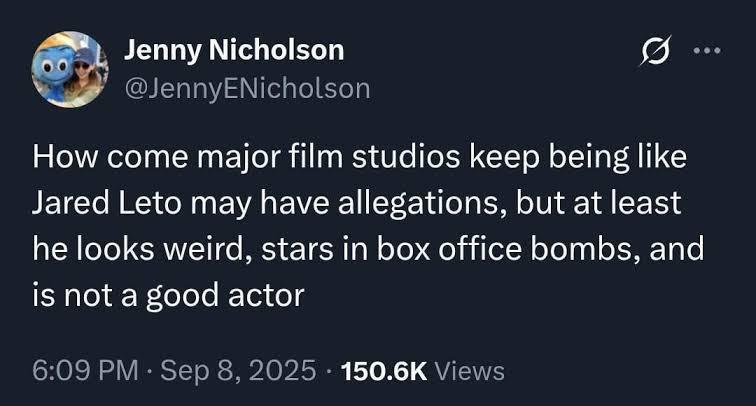
Netflix: The movie Morbius was generally considered to be a complete flop to the point where it almost went straight to DVD / streaming. It barely made a splash even on Twitter as best I can recall. Despite the negative reviews and flop, Netflix pushed it on me multiple nights in a row as daily picks. The 32nd time I saw the preview pop up explained why it didn’t make it but doesn’t explain why Netflix opted to buy the rights to it. So in the trailer it goes from “I feel good” spoken confidently, not “I feel good?”. I think that would have been more realistic and impactful since presumably he wouldn’t be sure if he feels good or not. Because if you go from one state of physical health that is really poor, to getting better like that, it has to be difficult to accept. Your body’s not used to it, your brain is definitely not used to it. You come up with the words, trying to figure out what good means because that’s not your normal. So it should be a question, not a statement that rolls off the tongue. Then after that if you go from sick to healthy, you don’t just go climbing up a bookshelf, then jump 30 feet across the room and grab a banner. You would more likely take it slow to determine what is even happening.
If my diabetes was cured tomorrow of course I would eat some sugary food without taking insulin, but I would also be checking my blood sugar every five minutes to see if it was real or not. So in the movie, it seems a more natural reaction would be to start small with push-ups or walk up a hill or eat gluten if allergic. I feel that whoever wrote the script has never been in poor health and didn’t talk to someone who is, to see how they would react. There’s no sense of realism and then picking someone who’s just controversially a bad actor to begin with to play this guy? How did the studios not understand the chance of a flop? For some reason Hollywood keeps going to the same person that repeatedly gets panned in reviews. What are they thinking?
Netflix Rating System
I’ve briefly touched on the Netflix system of rating via a thumbs-up vs thumbs-down before. What does that rating even mean for thumbs down? Are you rating the plot of the movie? The casting or cinematography? The whole experience or the genre? You might not like a movie and that is where downvoting gets complicated. A while back I gave a thumbs-up to a movie that I had seen elsewhere, not on Netflix’s platform. But in telling Netflix I rated with a thumbs-up, meaning I liked it, that should mean I absolutely should not see the movie pushed to me on the main banner. Literally within 24 hours of me rating it on Netflix no less. So once again, why are you recommending shit I have seen despite a vague but unconditional “like”?
My biggest fear is giving a thumbs-down to a TV show or movie because I don’t understand how the algorithm actually works. Does that reflect the actors, writing, directing, production, special effects, cinematography… which is it? Because all of those matter and you can watch a movie that is brilliant in some regards and trash in others. Then consider the times where both average and astute viewers can’t fully explain why a movie didn’t land for them. They just know something is off and that it isn’t right.
Those ratings also get more skewed on Netflix’ side whether they know it or not. Many movies Netflix invests in are basically remakes of prior movies, just under a different name and set of actors. Boil a movie down and you may think “Yep, that was basically Die Hard all over!” Contrast this with original great content like Stranger Things which gets a lot of thumbs-ups and it makes me wonder why Netflix continues to pursue movies that are so lacking. This is what Netflix is investing in and they see it as a path forward despite it being on the back of a world of other more creative shows that push the envelope.
Trailers, Comedy, and Pandering
When a movie studio comes up with a new movie, especially Netflix lately, that casts big name actors and the plot is initially shown as serious, yet later you see a full trailer and it injects a lot of humor? And then they put forward a character that has no value to the plot and their only purpose is comedic humor? That’s a glaring warning sign that they are pandering to the audience by trying to make a blockbuster hit, not a good movie.
TV Episode Intros in the 2020s
For decades, television shows had a static introduction that varied based on the type of show and intent. Sometimes introducing characters, locale, or setting the mood with music and graphics. At some point relatively recently, a few shows basically did away with them in favor of a few seconds of a graphic display of the show name. For a broadcast TV show with commercials that is slated for one hour, there is actually 42 minutes of the show. Half hour scheduled shows only have 22 minutes. So when a show has a 30 second or worse, one minute intro, it can get repetitive and annoying. Even if the intro is really cool and well-done, seeing it six to 24 times in a season just gets old.
The show Locke & Key has a very short intro that is just graphics. You can’t really skip past it because it’s so short, maybe 5 to 8 seconds. What stood out though is that every episode has a different intro which means they spent a significant amount of money (by our standards, not Hollywood) budget for relatively simple graphics. Since the intro didn’t highlight characters or the plot it is an interesting choice to me. While this can probably be done by generative AI, it serves as a good example of where money goes into a show that realistically, no one cares about that intro most likely. Sure, it can get the random loquacious blogger to talk about it but otherwise. =)
Regardless, other than a brief splash screen with the show’s name, I think these intros should largely be scrapped. Take that money and use it for the actual content instead. Instead, go for better production or a higher tier of acting talent. Outside of this blog I don’t recall any of my friends talking about the introduction to a television show.
James Franco
Took me a long time to understand but James Franco has no real acting range lately, he basically has three faces. Happy which he actually pulls off very well, neutral, and then concerned with the furrowed brows. There’s basically no range in between any of those three otherwise. Furrowed brow can also mean pain, confusion, guilt, or sorrow.
Leave a Reply