
Earlier this year a good friend gave me a book, “A Natural History of Empty Lots: Field Notes from Urban Edgelands, Back Alleys, and Other Wild Places” by Christopher Brown. The book follows Brown primarily, occasionally including members of family, after he moved to Austin, Texas and purchased an empty lot in an industrial section of town. From there he learns to better appreciate the nature that springs up around us. The title of the book is, in my opinion, misleading as the actual topic of empty lots is scarcely seen in the book. The sub-title is spot on as most of the book focuses on areas of nature adjacent to the town or areas that have been re-wilded.
By page 50 I had observed that the book talked about empty lots a fraction of the time. But it is the areas often adjacent to these empty lots or abandoned areas of a town that butt up against more natural areas. At this point in the book it was also more about Brown’s life, an autobiography mixed in with talk of nature and animals. My original impression is that Brown is a narcissist the way he focuses on himself so much which overshadows the topic of the book as stated in the title.
While Brown frequently diverges from the topic and focuses heavily on his life there are times where he only talks about that as a vehicle to give perspective and how he learned and transformed himself which allowed him to better appreciate the areas and wildlife. There’s one section that was of interest to me about revolution and citizens that want to fight for their rights but it’s very short and definitely off topic. Other sections of the book turn into a history lesson that provides context and meaning at times, but veers too far from relevance it seemed.
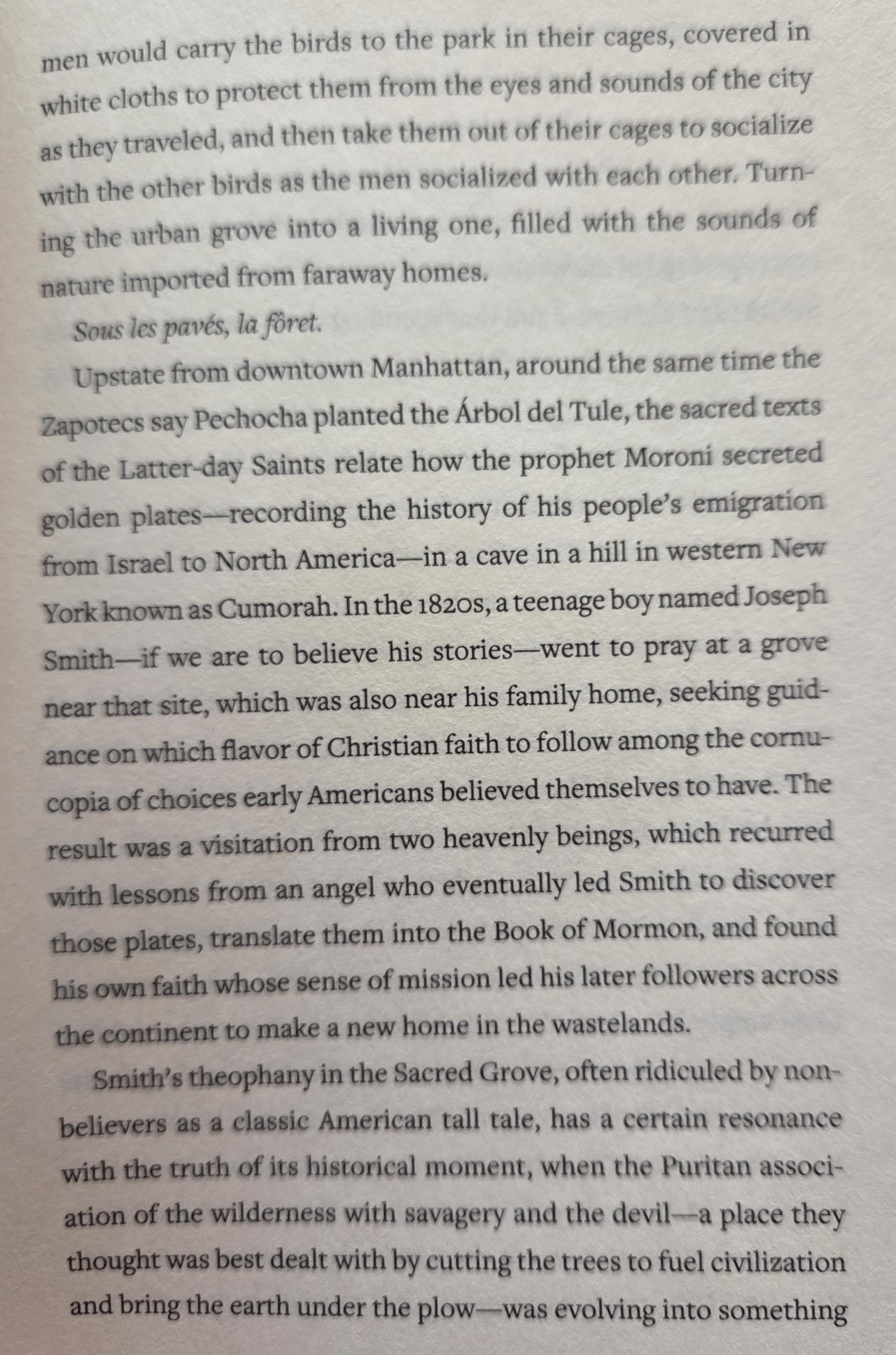
While I criticize the book there are some observations that are very clever and I appreciated them. I learned of a new term, “solastalgia“, that Wikipedia defines as “a form of emotional or existential distress caused by negatively perceived environmental change.” That resonates with many of my friends and myself as we see humans continue to encroach into nature, the negative impact on wildlife, and the resulting crisis that can manifest for those animals. Doing wildlife rehabilitation you consistently see it first hand.
Later Brown recounts seeing “hundreds of weekend warriors tearing [the marshlands] up on ATVs” and makes an astute observation in response:
Maybe the apocalypse already happened, too slowly for any of us to realize.
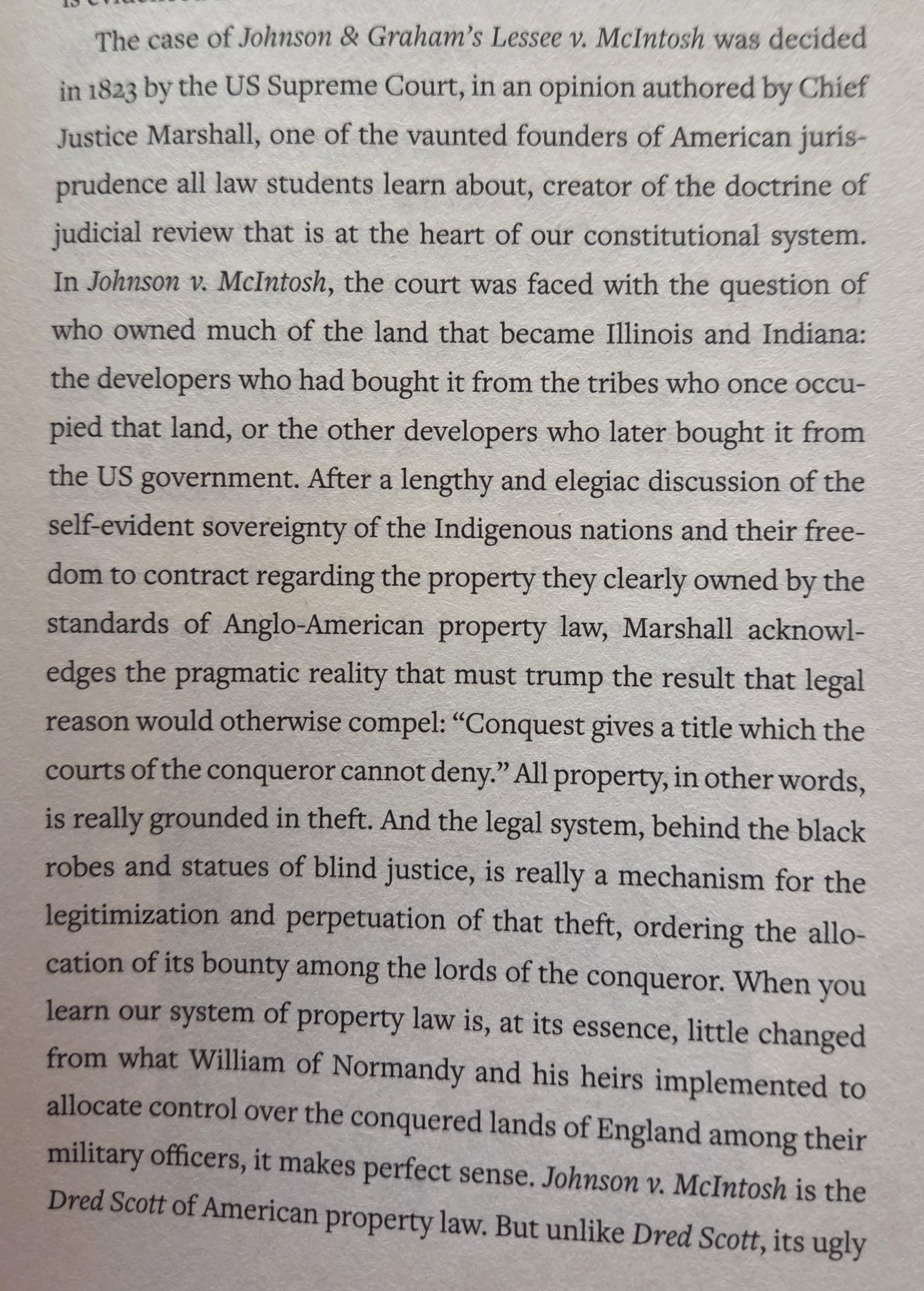
Via Brown’s past as a lawyer he also discusses the history around ownership of the land. As someone who has worked on cases decided by the U.S. Supreme Court, he holds no punches in directly blaming them for helping to legitimize the theft of land from the indigenous people via property law. Brown starts with the case of Johnson & Graham’s Lessee v. McIntosh as the vehicle to get there:
By the end of the book though, it felt less like a book on topic and more about random bits of History from Austin, Texas to Mexico to New Zealand and more. While it all kind of has a tie-in of sorts, it becomes further and further away from the topic at hand. When Brown talks about empty lots and jumps back in history 500 years I thought about how the concept of the empty lot in this context wasn’t a thing. To me, it kind of loses some of the purpose and sense of why the book was written.
As I mentioned at the start, the book has plenty about him and his family where it’s a lot less about the empty lots and the urban wilderness nearby and more about his personal experience and observations, and that comes across more as biographical than factual.
Leave a Reply